The function of Digital Identifiers (DIDs) and their role in product authenticity
By Marta Escabias

In an increasingly digitized global market, ensuring the authenticity of products is a fundamental challenge. Counterfeiting, opacity in the supply chain, and the lack of reliable information about the origin of goods generate distrust among consumers, economic losses for companies, and regulatory risks.
The European Union, through the Digital Product Passport (DPP), has paved the way to solve this challenge. Starting in 2026, sectors such as textiles, electronics, batteries, and construction materials will be required to include a verifiable digital history in each product.
In this context, Decentralized Digital Identifiers (DIDs) become a key component. In this article, we will explain what DIDs are, how they work, and what role they play in product authenticity within the framework of the DPP and solutions like iPASS.
.
What are Digital Identifiers (DIDs)?
DIDs are a standard created by the W3C that defines a unique and decentralized digital identifier, associated with a specific entity. That entity can be:
- A person.
- An organization.
- A device.
- Or even a physical product.
Unlike traditional identifiers (such as a serial number or a barcode), DIDs do not depend on a central authority to be issued or validated. Instead, they use blockchain technology or distributed networks to guarantee their uniqueness, security, and persistence over time.
A DID is not just a number: it is an identifier linked to a DID document, which contains cryptographic keys and metadata that allow its authenticity to be verified.
The relationship between DIDs and product authenticity
When a product has a DID, that unique identifier functions as its “digital fingerprint.” This DID accompanies it throughout its entire life cycle and ensures that any information linked to it can be verified. Some of the key advantages are:
- Uniqueness: each product has an exclusive identifier, impossible to duplicate or falsify.
- Persistence: the DID continues to exist even if the product’s owner changes.
- Verifiability: any actor (consumer, regulator, distributor) can independently verify the validity of the DID.
- Decentralization: it does not depend on a centralized database, reducing the risk of manipulation.
In other words, a DID turns each product into a verifiable digital asset, which is fundamental for compliance with the DPP.
iPASS: DID as the basis of authenticity
At iCommunity, we have integrated DIDs into the heart of iPASS, our system for managing the Digital Product Passport.
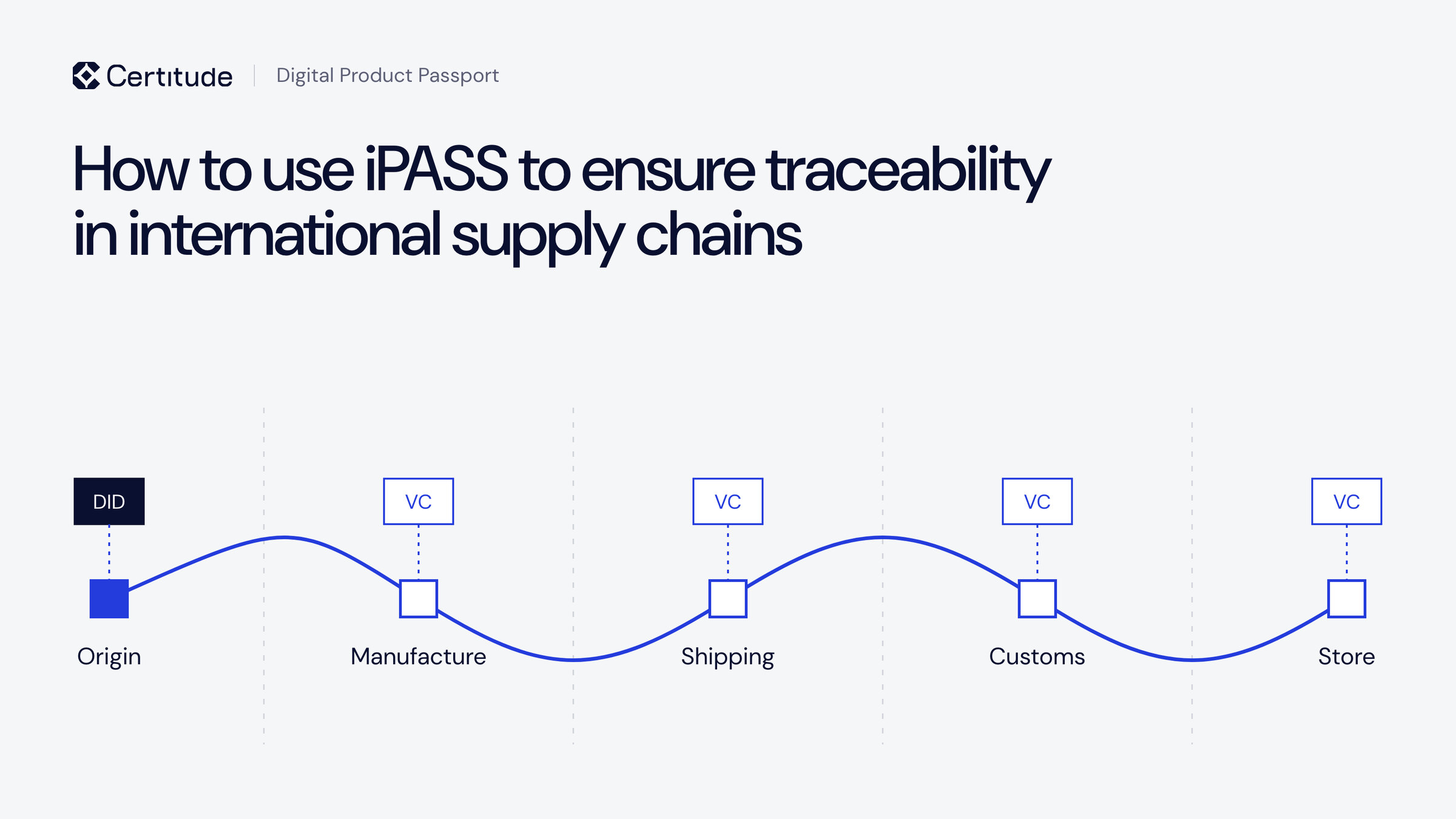
Each product registered in iPASS receives a Decentralized Digital Identifier that accompanies it in all its milestones: design, manufacturing, transport, use, repair, and end of life.
This allows all the information linked to the product—stored in the form of Verifiable Credentials (VC)—to be consulted and validated in relation to its DID. Thus, the DID acts as the “anchor of authenticity”, guaranteeing that the data is really linked to the product in question.
Application of DIDs in priority sectors
The sectors that must implement the DPP starting in 2026 are the perfect ground to understand how DIDs make a difference:
Textiles and footwear
Each garment or shoe can have a DID that certifies its origin. Through this identifier, the consumer can verify if the fibers are sustainable, if the manufacturing complies with labor standards, and what the recycling options are.
Electronics
A smartphone with a DID can demonstrate the origin of its critical minerals, its certified energy consumption, and the repair history, providing confidence to both the buyer and the regulator.
Batteries
In a key sector for electric mobility, DIDs allow verifying the authenticity of each battery, its carbon footprint, and its recycling capacity, combating fraud and guaranteeing regulatory compliance.
Construction materials
Steel, cement, or insulation can have DIDs that document their origin, the use of resources, and their emissions. This not only helps to comply with regulations but also adds value to sustainable construction projects.
Benefits of using DIDs
Implementing DIDs in products offers significant advantages for all actors:
- For companies: protection against counterfeiting, access to new markets, and regulatory compliance.
- For consumers: confidence when buying, access to transparent and verified information.
- For regulators: ability to audit and supervise in an agile and reliable way.
- For the global market: creation of an interoperable trust ecosystem between different countries and sectors.
Implementation challenges
Although the potential of DIDs is enormous, their adoption also poses challenges:
- Standardization: it is necessary for all sectors to adopt common frameworks so that DIDs are interoperable.
- Education: both consumers and companies must learn how to use this new digital infrastructure.
- Technological integration: SMEs will need support to incorporate DIDs into their processes.
- Scalability: ensuring that systems like blockchain can handle millions of identifiers efficiently.
These challenges are not insurmountable; in fact, they are part of the natural maturation process of any disruptive technology.
The future of digital authenticity
The use of DIDs is not limited to complying with European regulations. In the long term, DIDs will lay the foundations for an economy in which each product, service, or device has its own verifiable digital identity.
This will open the door to:
- More secure e-commerce, with products authenticated from origin.
- Traceable second-hand markets, where the history of each asset is verifiable.
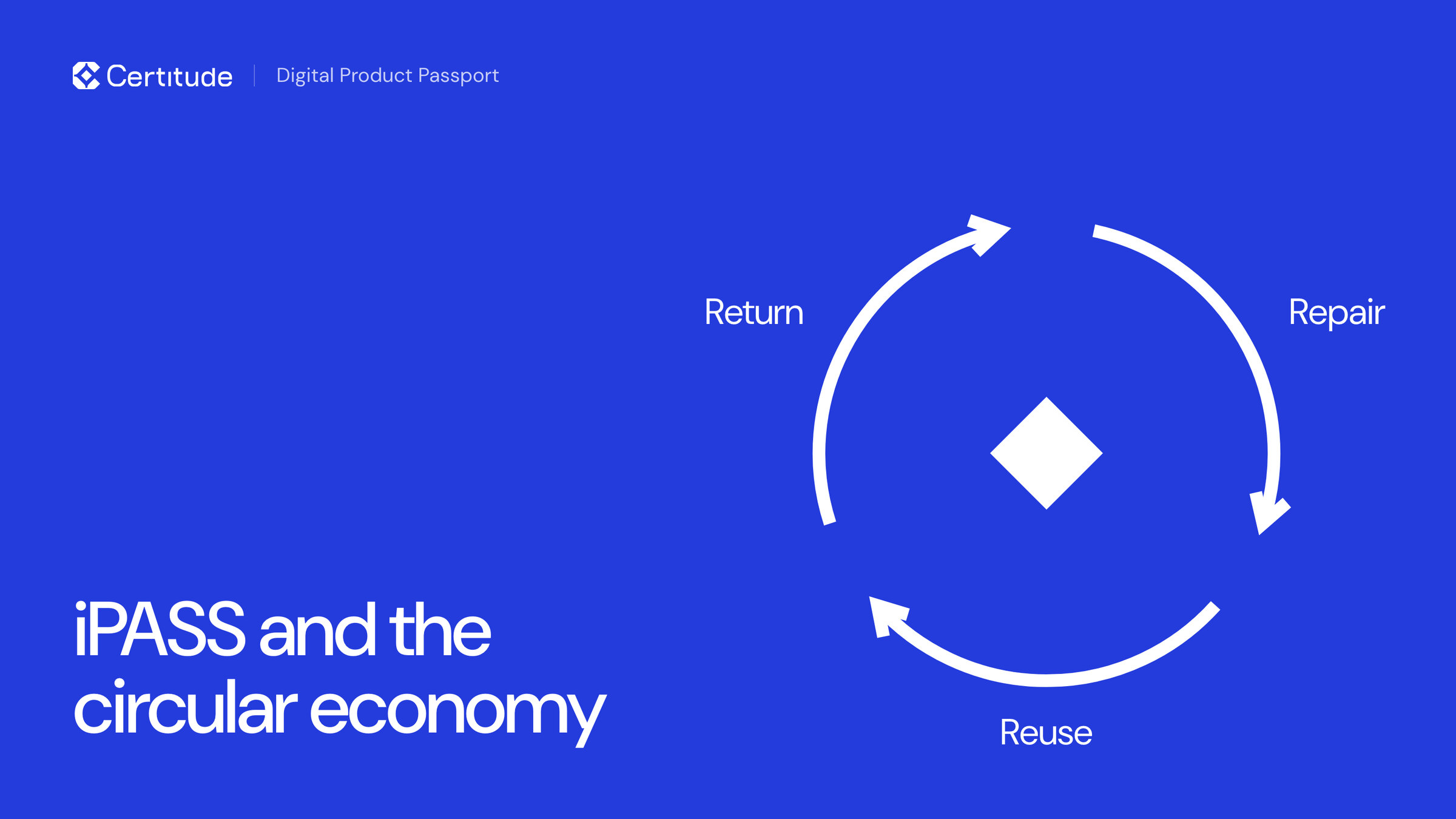
- Advanced circular models, in which resources are managed more efficiently.
- Integration with digital wallets, where consumers will manage not only their identity but also the credentials of the products they own.
Decentralized Digital Identifiers (DIDs) represent a fundamental advance in the way we manage the identity and authenticity of products. Integrated into solutions like iPASS, they guarantee that each consumer good has a unique, verifiable, and secure identifier that accompanies the product throughout its life cycle.
In a world where counterfeiting, opacity, and distrust have been the norm, DIDs allow creating an ecosystem of digital trust, aligned with the objectives of the Digital Product Passport and the transition towards a more transparent and sustainable economy.
The future of product authenticity will be digital, decentralized, and verifiable, and DIDs will be the key piece of this new paradigm.