iPASS and circular economy: Repairability, Reuse, and Return to the Producer
By Marta Escabias
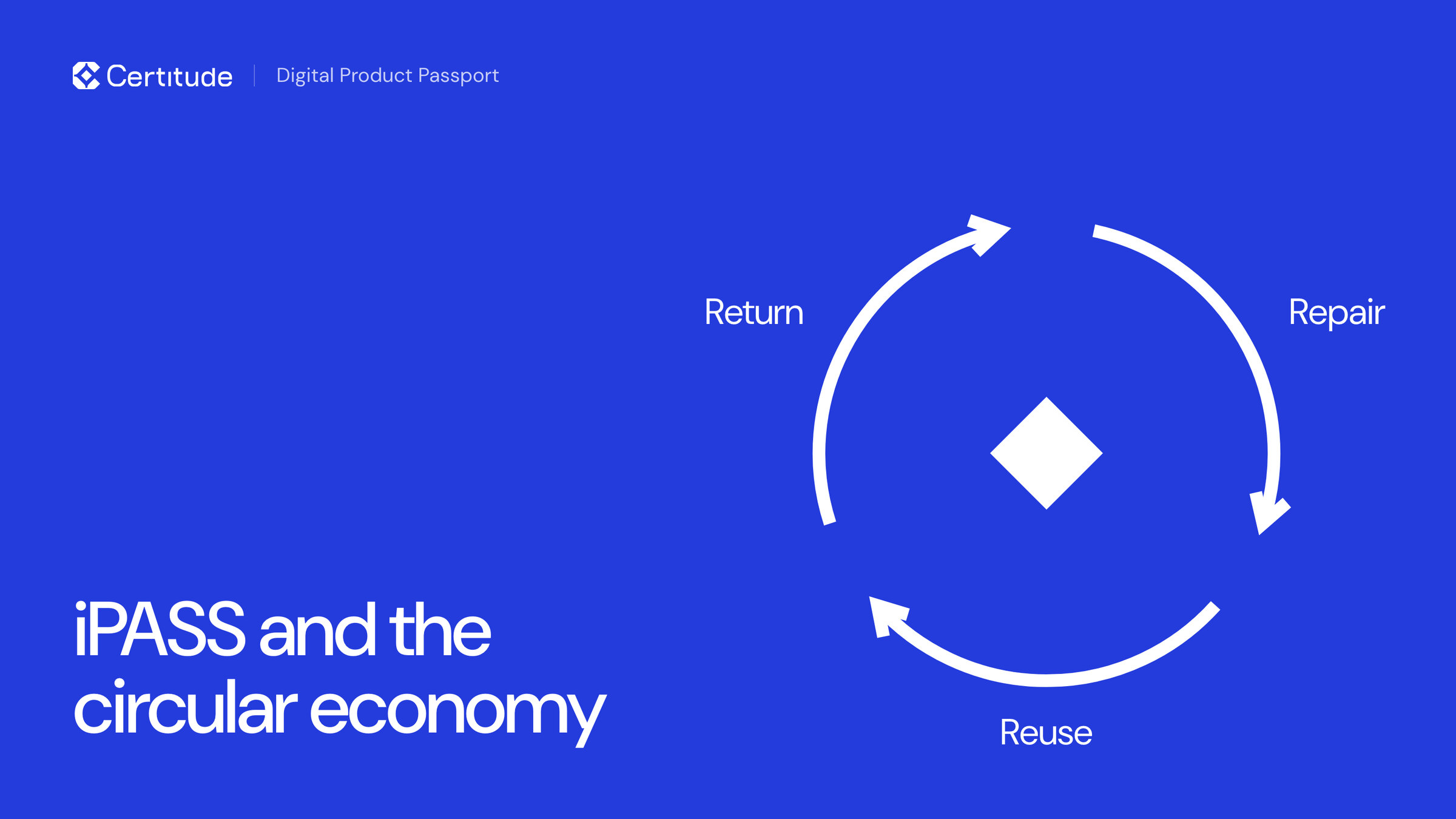
The linear economy of “produce, use, and discard” has become obsolete in the face of the environmental and social challenges of our time. Instead, the circular economy is presented as a more sustainable model, in which products extend their useful life, are repaired, reused, and, when it is no longer possible to take advantage of them, are returned to the producer or properly recycled.
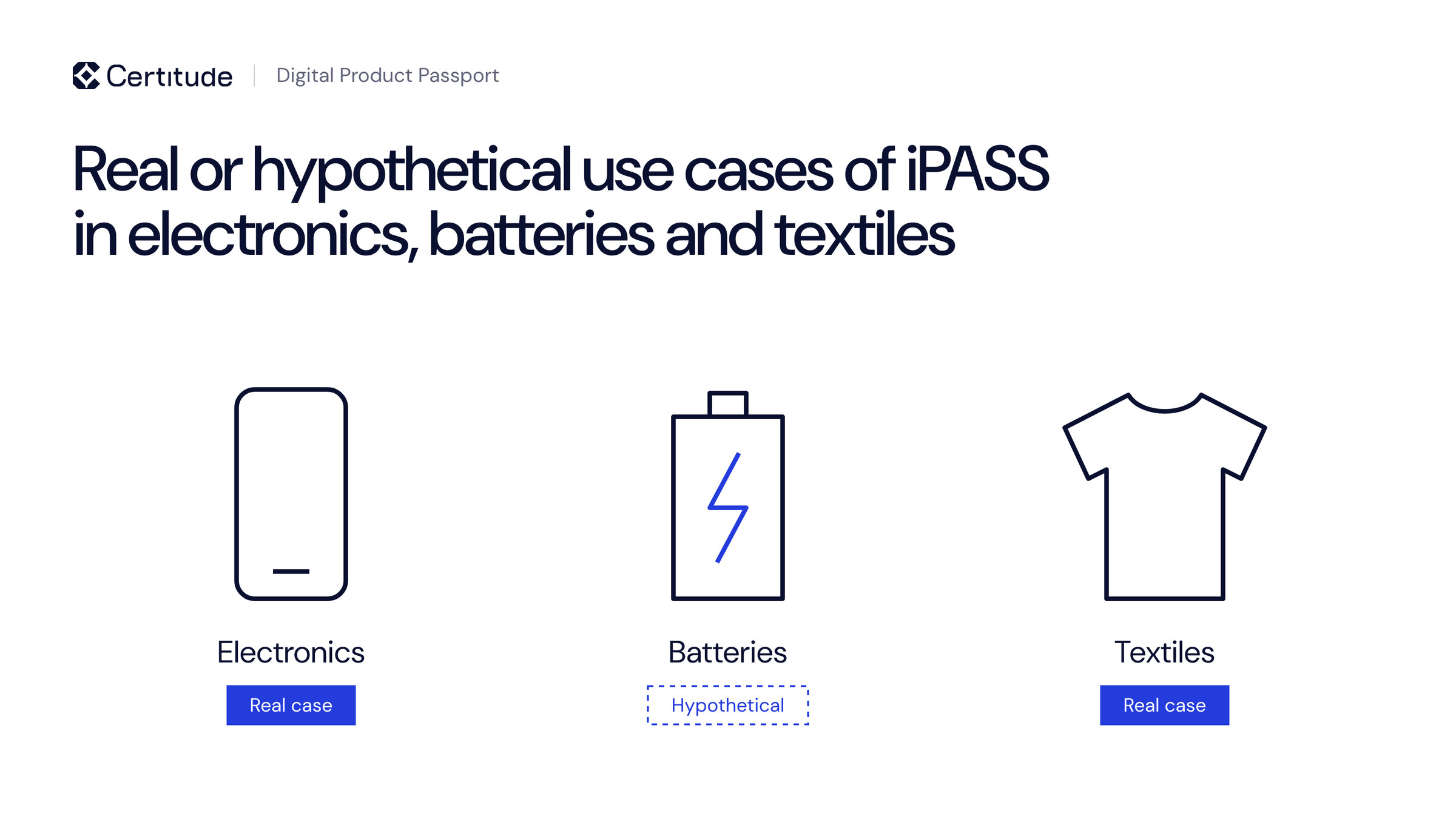
To make this vision a reality, the European Union has designed the Digital Product Passport (DPP), which will be mandatory from 2026 in sectors such as textiles, electronics, batteries, and construction materials. The DPP seeks to guarantee the traceability of each product and facilitate its integration into circularity.
In this context, from iCommunity we develop iPASS, a technological solution that turns the DPP into a practical tool for companies, regulators, and consumers. In this article, we will explain how iPASS drives the circular economy through three fundamental pillars: repairability, reuse, and return to the producer.
Repairability: Giving products second chances
One of the main objectives of the DPP is to promote the repairability of products, preventing them from becoming waste prematurely.
How it works with iPASS
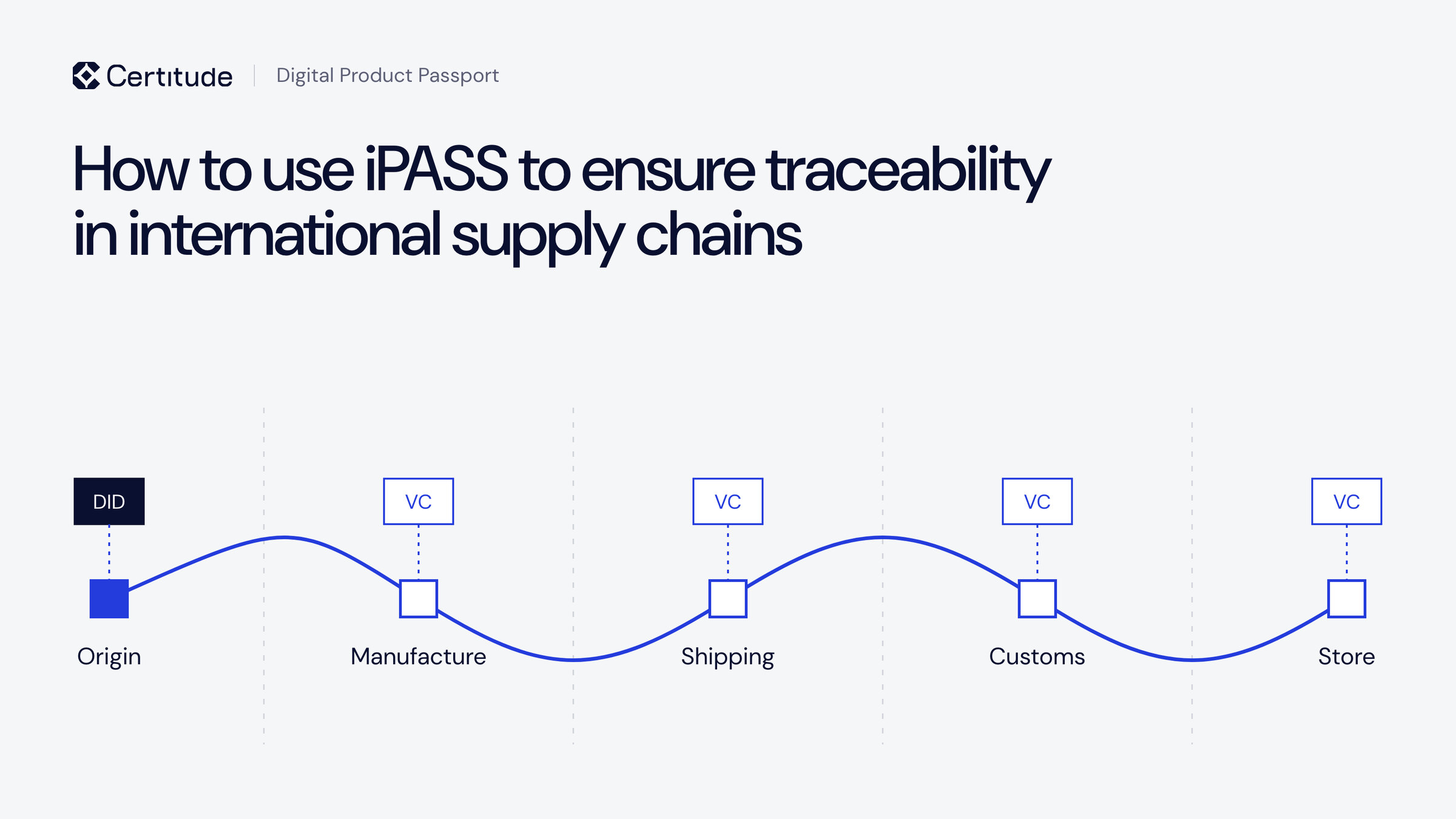
Each product registered in iPASS has a Decentralized Digital Identifier (DID) and a digital history that documents:
- Verified repair manuals.
- History of previous repairs.
- Certification of the use of original parts.
- Authorized workshops that have intervened in the product.
In this way, a consumer who takes their electronic device to be repaired can verify, through a QR/URL, if the replacement part used is genuine and if the repair is registered in the digital passport.
Impact on the circular economy
Repairability extends the useful life of products, reduces the need to extract new raw materials, and decreases the volume of waste. In addition, it creates new business opportunities for repair shops and after-sales services.
Reuse: Extending the value of goods
The second pillar of the circular economy is reuse. Instead of discarding products that can still be useful, they are given a second life through reconditioning or resale.
How it works with iPASS
With iPASS, reuse becomes a verifiable and reliable process:
- The digital passport includes information on the condition of the product.
- Reconditioners can issue Verifiable Credentials (VC) certifying that the good has passed quality tests.
- Consumers can trust that a garment, device, or reconditioned battery meets clear standards.
Practical example
A reconditioned laptop is sold on a second-hand platform. The buyer scans the product’s QR and accesses its history: date of manufacture, repairs carried out, parts replaced, and reconditioning certification. Transparency generates trust and encourages responsible consumption.
Impact on the circular economy
Reuse reduces pressure on landfills and delays the need to produce new goods. It also drives stronger second-hand markets, based on digital trust.
Return to the producer: Closing the circle
The return to the producer is key for the circular economy to function comprehensively. It is about products, once their useful life is over, being returned to the companies that manufactured them, to be recycled or reused.
How it works with iPASS
The digital passport facilitates the return to the producer in several ways:
- Records credentials that verify the return process.
- Allows the producer to document what percentage of materials has been recovered and how they have been recycled.
Practical example
A consumer returns an electric vehicle battery to the manufacturer. Thanks to the DPP managed in iPASS, the company registers the return, certifies the recycling, and documents the materials recovered. This data not only complies with regulations but also serves to improve processes and demonstrate environmental commitment.
Impact on the circular economy
The return to the producer ensures that materials return to the value chain and the extraction of new raw materials is reduced. In addition, it promotes the extended producer responsibility (EPR), making companies involved in the management of the complete life cycle of their products.
Benefits for ecosystem actors
The implementation of the DPP with iPASS around repairability, reuse, and return to the producer generates benefits for all participants:
- Manufacturers: comply with regulations, improve their reputation, and access new business opportunities in after-sales services and recycling.
- Consumers: have more confidence in repairs, second-hand products, and return programs.
- Regulators: can digitally audit and verify that companies comply with sustainability objectives.
- Environment: the pressure on natural resources is reduced and the generation of waste is decreased.
Challenges in adoption
Although the model is promising, it also faces challenges:
- Initial digitization costs, especially for SMEs.
- Consumer education, who must learn to use the QR/URLs and value the information of the DPP.
- Collaboration in the value chain, since all actors must contribute data in a standardized manner.
- Technological scalability, to manage millions of digital passports in different sectors.
How iPASS responds to these challenges
At iCommunity we have designed iPASS to simplify the transition to the circular economy:
- Intuitive panels for manufacturers and operators to issue and manage digital passports.
- Blockchain iBS, which ensures the immutability and public consultation of data.
- Integration with European standards such as VC and DID, guaranteeing interoperability.
- Easy access for consumers via QR/URL.
In this way, iPASS converts the principles of the circular economy into tangible and verifiable processes.
The circular economy is not a theory: it is an urgent necessity to ensure a sustainable future. With the Digital Product Passport, Europe has launched a key tool to promote repairability, reuse, and return to the producer.
With iPASS, from iCommunity we offer the technological infrastructure that turns that vision into reality: products with digital identity, transparent and immutable information, and processes that close the production cycle.
The future of the industry will be circular, digital, and reliable, and the combination of the DPP with iPASS will be the key to making it possible.