
As part of Europe’s transition toward a circular and digital economy, the Digital Product Passport (DPP) emerges as an innovative tool that allows consumers, businesses, and authorities to access essential information on the lifecycle of products.
This passport aims to centralize and make available data on product manufacturing, composition, durability, maintenance, and recyclability, supporting a more sustainable and transparent economy.
What is the Digital Product Passport?
The Digital Product Passport (DPP) is an initiative driven by the European Union in line with the Circular Economy Action Plan and the Product Design Sustainability Strategy. The implementation of the DPP addresses the need for accessible, traceable information, enabling users and companies to understand product characteristics and environmental impact throughout the entire lifecycle.

Through this tool, companies are expected to adopt more sustainable design practices, while consumers can make informed and responsible purchasing decisions. Additionally, the data generated by the DPP will support authorities in meeting environmental and sustainability regulations, fostering transparency that drives waste reduction and effective recycling across Europe.
Benefits for consumers
One of the main objectives of the DPP is to empower consumers to make more informed, conscious, and responsible decisions. The most notable benefits include:
- Transparency in purchasing: users will be able to know which materials have been used, under what conditions a product was manufactured, and what its environmental impact is.
- Greater trust: with access to verified information, consumers can easily distinguish between sustainable products and those that do not meet clear environmental criteria.
- Responsible consumption decisions: with clear information on durability and repairability, customers can choose higher-quality products with a longer lifespan.
- Ease of recycling: the DPP provides clear instructions for the correct management of products at the end of their lifecycle, promoting recycling and the circular economy.
In summary, consumers gain transparency, trust, and decision-making power, contributing to a fairer and more sustainable market.
Benefits for businesses
Although the mandatory nature of the DPP may be seen as a challenge, it actually represents a great opportunity for companies.
- Regulatory compliance: the DPP will become mandatory in the European Union in the coming years. Early adoption ensures legal certainty and avoids penalties.
- Competitive advantage: brands that embrace the DPP early will demonstrate a strong commitment to sustainability, standing out in the market.
- Consumer trust: transparency fosters a positive reputation. Customers will place greater trust in brands that are clear about their product traceability.
- Process optimization: implementing digital traceability systems also helps companies improve their internal processes for quality control and logistics.
- Access to funding and aid: the EU and member states prioritize financing projects aligned with the European Green Deal. Adopting the DPP facilitates access to these funds.
Benefits for society and the environment
The positive impact of the DPP extends far beyond consumers and companies:
- Waste reduction: by promoting repairable and recyclable products, the amount of waste ending up in landfills is reduced.
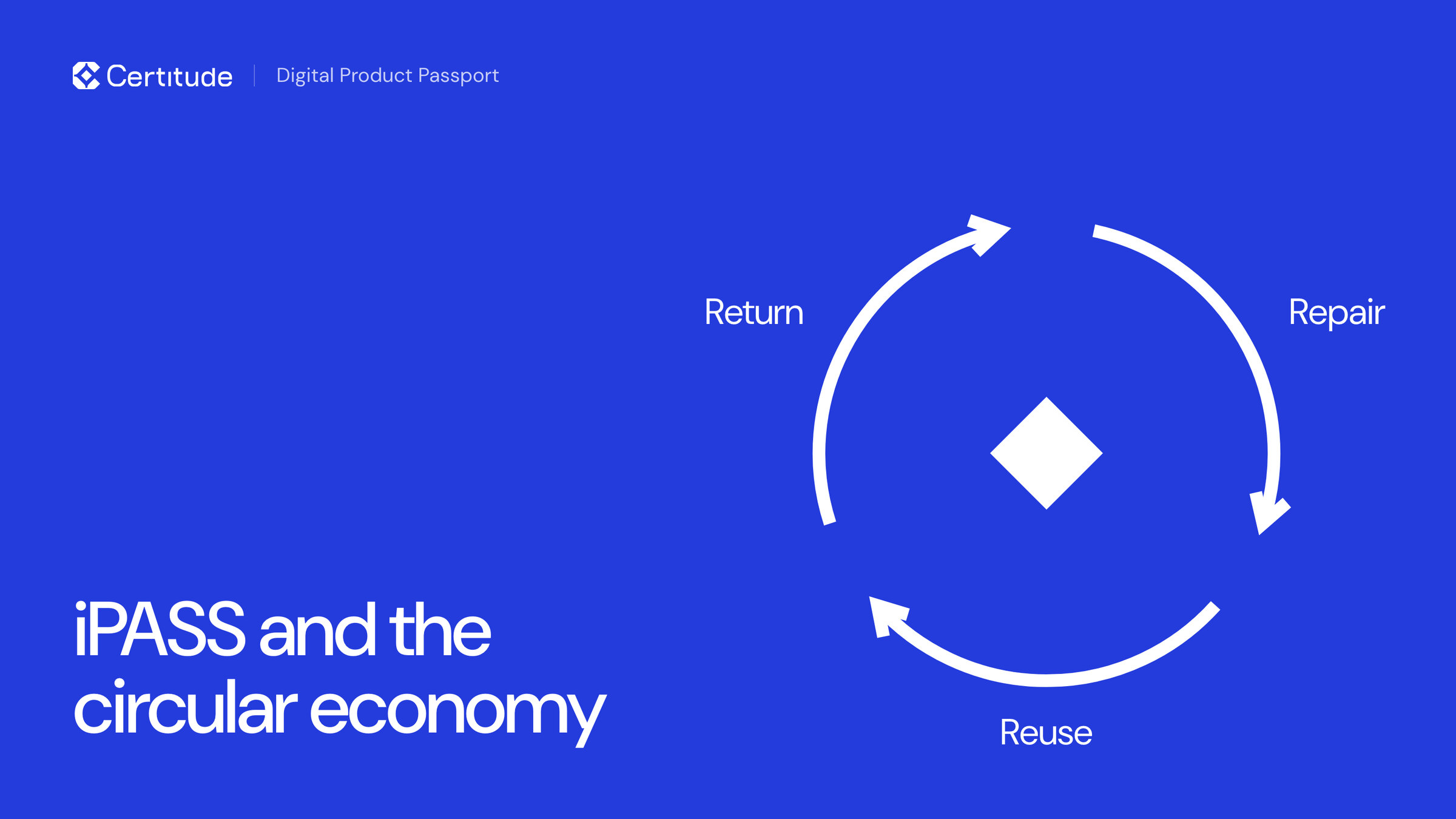
- Circular economy: it encourages a model where products are designed to be reused and recycled rather than discarded.
- Global transparency: authorities can better monitor compliance with environmental and sustainability regulations.
Overall, the DPP directly contributes to the goals of the European Green Deal and to a fair transition toward a more sustainable economy.
iPASS: Enhancing the value of the DPP
Although the DPP concept is innovative, companies need concrete tools to implement it effectively. This is where iPASS, the Digital Product Passport developed by iCommunity, comes in.
What does iPASS do?
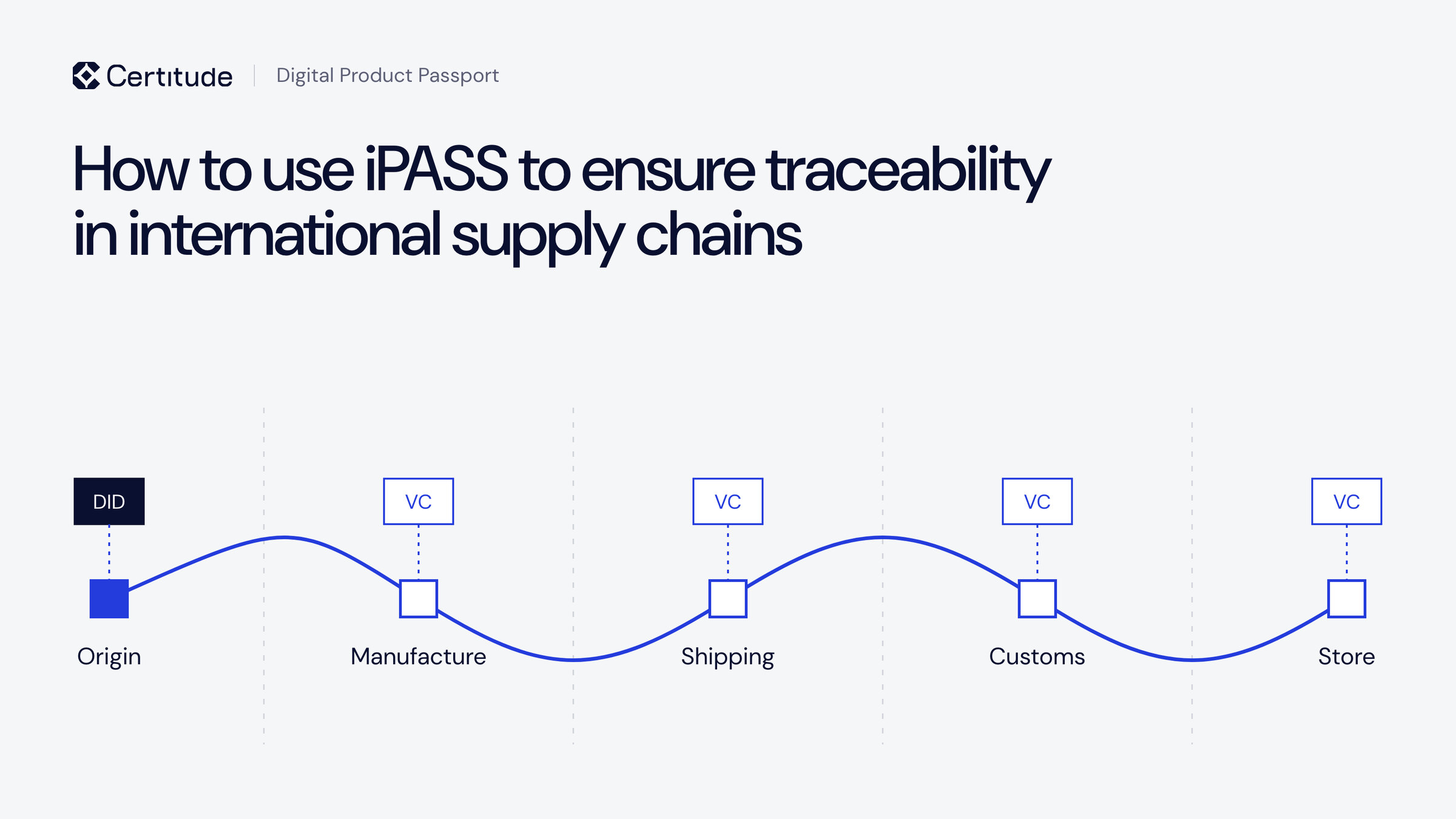
- Accompanies each product throughout its entire lifecycle: manufacturing, use, maintenance, repair, reuse, and recycling.
- Generates verifiable credentials (VCs) for each milestone, digitally signed with Decentralized Identifiers (DIDs).
- Records all information on blockchain (via the iBS platform), ensuring security, transparency, and immutability.
- Provides easy access to information through a unique QR code or URL that consumers can scan in seconds.
Specific benefits of iPASS
- Simplified regulatory compliance: iPASS automates the collection and recording of the information required by the DPP.
- Enhanced credibility: by recording data on blockchain, companies ensure that the information cannot be manipulated.
- Added value for consumers: access to clear and verifiable data increases trust and strengthens the brand–customer relationship.
- Scalability: iPASS is designed to work across multiple industries—electronics, batteries, textiles—adapting to the specific needs of each sector.
The Digital Product Passport is much more than a legal requirement: it is a transformative tool that benefits consumers, businesses, and society as a whole. Its contributions in terms of transparency, trust, and sustainability make it a key pillar of the circular economy in Europe.
However, implementing the DPP requires reliable and accessible technological solutions. This is where iPASS becomes a strategic ally, enabling companies not only to comply with regulations but also to strengthen their reputation, optimize processes, and gain competitiveness in an increasingly demanding market.
The future of responsible consumption is already underway, and with tools like iPASS, businesses can lead this shift toward a more sustainable and transparent world.