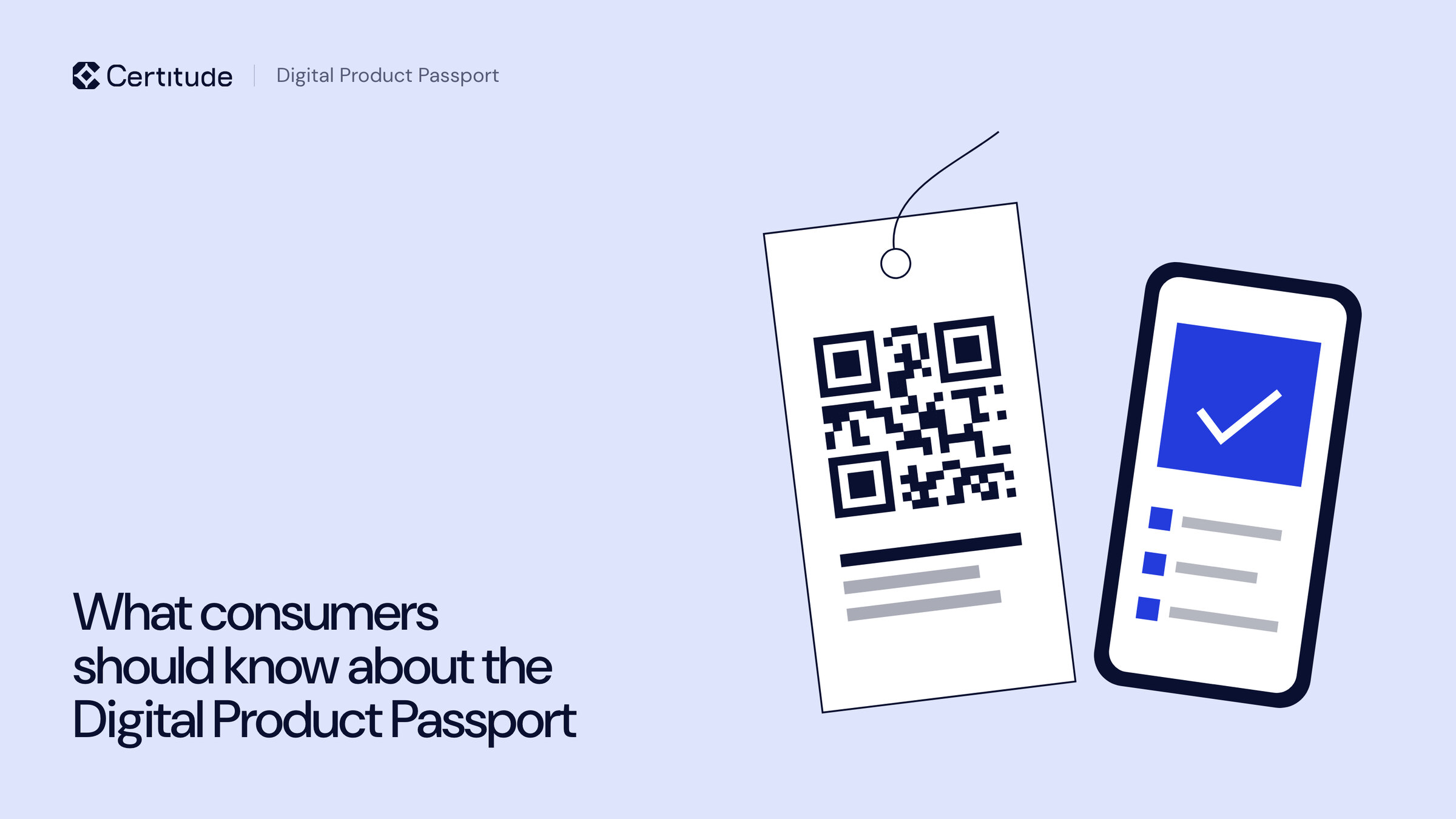
The Digital Product Passport (DPP) is one of the European Union’s most ambitious initiatives to promote the circular economy and ensure transparency in value chains. As of 2026, it will be mandatory in sectors such as textiles, electronics, batteries, and construction materials, and will subsequently expand to more industries.
This regulatory change will not only affect manufacturers and consumers, but will also give regulators and auditors a crucial role, who must ensure that the data included in each DPP is truthful, complete, and complies with established standards.
In this article, we analyze the role of these actors in supervising the DPP, the challenges they face, and how tools such as iPASS, developed by iCommunity, can facilitate their control and verification work.
The role of regulators in the DPP
Regulators are the institutions responsible for defining, implementing, and enforcing the DPP regulations in the EU Member States. Their role includes:
- Defining information requirements: deciding what data should be included in the DPP for each sector (materials, manufacturing processes, emissions, recycling options, etc.).
- Monitoring compliance: ensuring that all companies that market products in the EU implement the digital passport.
- Establishing sanctions: applying measures in case of non-compliance, from fines to restrictions on market access.
- Updating regulations: adapting the requirements as technologies and sustainability objectives evolve.
Within this framework, regulators not only become guarantors of compliance, but also facilitators of innovation by defining a clear framework that promotes digitization and transparency.
The role of auditors in the DPP
Auditors (internal, external, or independent) will be key players in the DPP validation and supervision process. Their main function will be:
- Verify data accuracy: verify that the information recorded in the DPP reflects the reality of the product.
- Evaluate traceability: ensure that each milestone in the product lifecycle is documented and supported by verifiable evidence.
- Certify processes: validate that companies use appropriate systems to collect and record information.
- Detect non-compliance or fraud: identify inconsistencies that may indicate data manipulation or falsification.
Auditors become the first line of defense against greenwashing, as the DPP requires verifiable evidence, not mere corporate statements.
The challenges of regulators and auditors
Although the DPP opens opportunities, it also poses significant challenges for those who must supervise it:
- Data volume: millions of products will circulate each year with digital passports that must be accessible and verifiable.
- Standardization: ensuring that all actors use compatible formats and credentials.
- International interoperability: coordinate with regulatory frameworks outside the EU.
- Limited resources: many regulatory bodies will need new technological and human capabilities to audit this volume of information.
- Public trust: ensuring that citizens perceive the DPP as a reliable tool and not as a mere administrative requirement.
How iPASS facilitates DPP supervision
At iCommunity, we have developed iPASS as a solution that not only helps manufacturers comply with the DPP, but also helps regulators and auditors to supervise and verify information more efficiently. Key features for supervision:
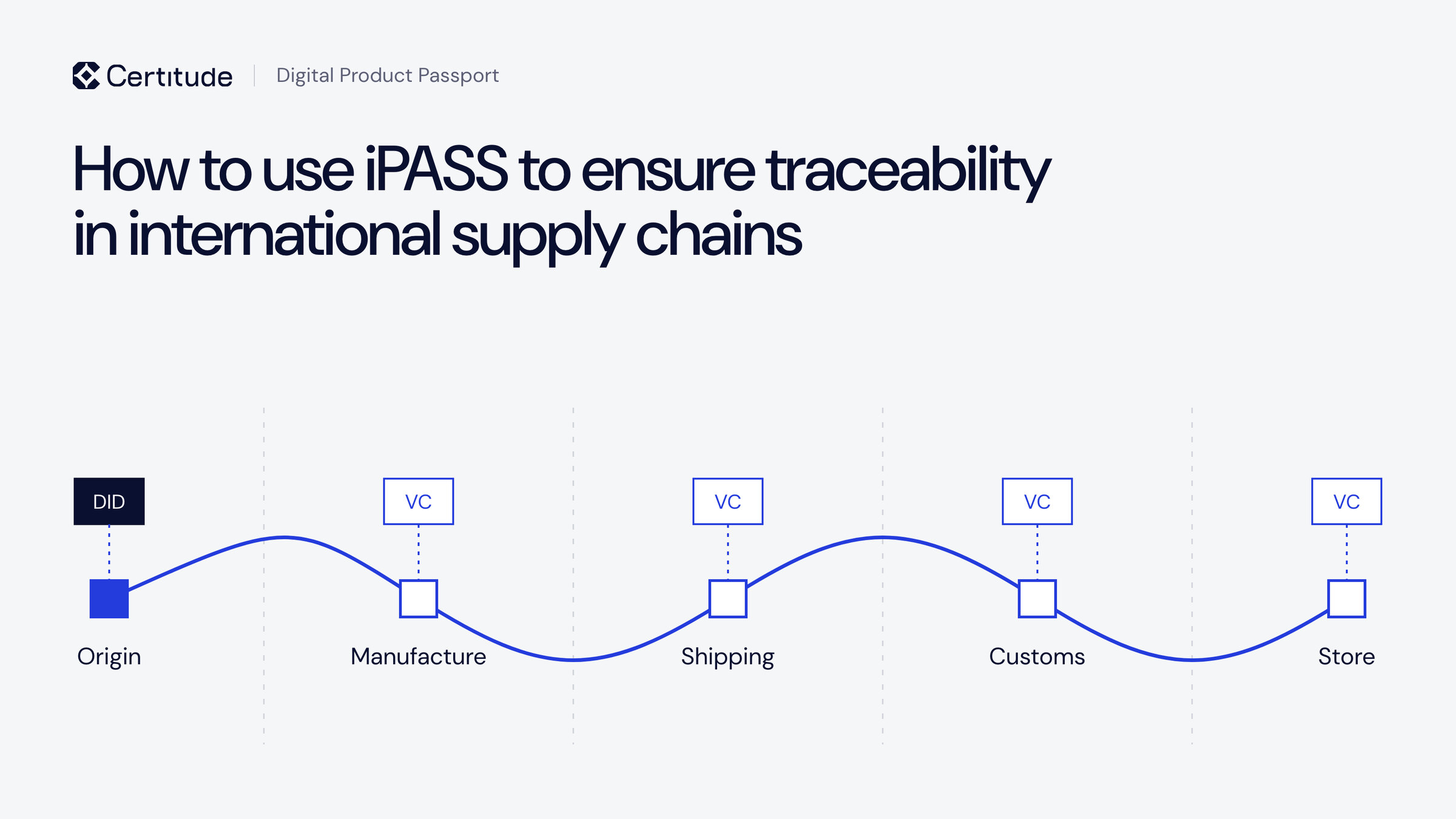
- Verifiable Credentials (VC): each product milestone is documented in a credential issued by an authorized actor, which allows auditing the information reliably.
- Digital Identifiers (DID): each product has a unique identifier that accompanies it throughout its life cycle, ensuring authenticity.
- iBS Blockchain: the data is recorded in an immutable infrastructure, which eliminates manipulation risks.
- Public consultation via QR/URL: regulators and auditors can easily access the product history from any device.
- Specialized control panels: allow real-time monitoring of regulatory compliance of different actors and sectors.
With these tools, DPP supervision becomes more agile, transparent, and reliable.
Examples in priority sectors
Let’s see how regulators and auditors will use the DPP in the initial sectors:
Textiles and footwear
- Auditors verify that fibers declared as recycled are supported by certifications issued in the form of verifiable credentials.
- Regulators can verify that brands meet waste reduction targets.
Electronics
- It is monitored that the origin of critical minerals is documented with verifiable credentials issued by suppliers.
- Regulators can audit the energy footprint declared on devices.
Batteries
- Auditors certify that manufacturers register the recycling capacity of each battery.
- Regulators verify that European targets for raw material recovery are met.
Construction materials
- It is validated that the cement or steel used in a project documents its emissions and energy efficiency.
- Authorities can compare data in real time to grant sustainability certifications.
Benefits of iPASS for regulators and auditors
Adopting solutions such as iPASS offers clear advantages:
- Simplified audit: data is accessible and verifiable in a single system.
- Lower risk of fraud: blockchain immutability ensures the reliability of information.
- Efficiency: reduces the time and resources needed to review dispersed information.
- Public transparency: citizens can access reliable information, increasing confidence in the market.
- Real-time vision: allows regulators to monitor trends and detect irregularities quickly.
The future of digital supervision
The DPP marks the beginning of a new era in regulatory supervision: one in which data is digital, verifiable, and immutable. In this new paradigm:
- Regulators become architects of trust, designing clear and auditable frameworks.
- Auditors become technological validators, supported by digital tools that increase their analytical capacity.
- Consumers benefit from more transparent and reliable markets.
The role of regulators and auditors will not be static: they must continuously adapt to new technologies, sectors, and requirements.
The Digital Product Passport will not only transform the way we produce and consume, but also the way we supervise markets. Regulators and auditors will have the responsibility of ensuring that the data is reliable, complete, and verifiable, preventing fraud and reinforcing public trust.
With iPASS, from iCommunity, we offer an infrastructure that facilitates this task, combining verifiable credentials, digital identifiers, and blockchain to ensure that each product has an authentic and immutable history.
The supervision of the DPP will be digital, decentralized, and transparent. And in this scenario, regulators and auditors will be the guardians of trust in the new circular economy.