Real or hypothetical use cases of iPASS in electronics, batteries, and textiles
By Marta Escabias
The Digital Product Passport (DPP) will become a mandatory tool for several key sectors of the European economy starting in 2026. Its mission is clear: to guarantee traceability, transparency, and circularity in the life of products.
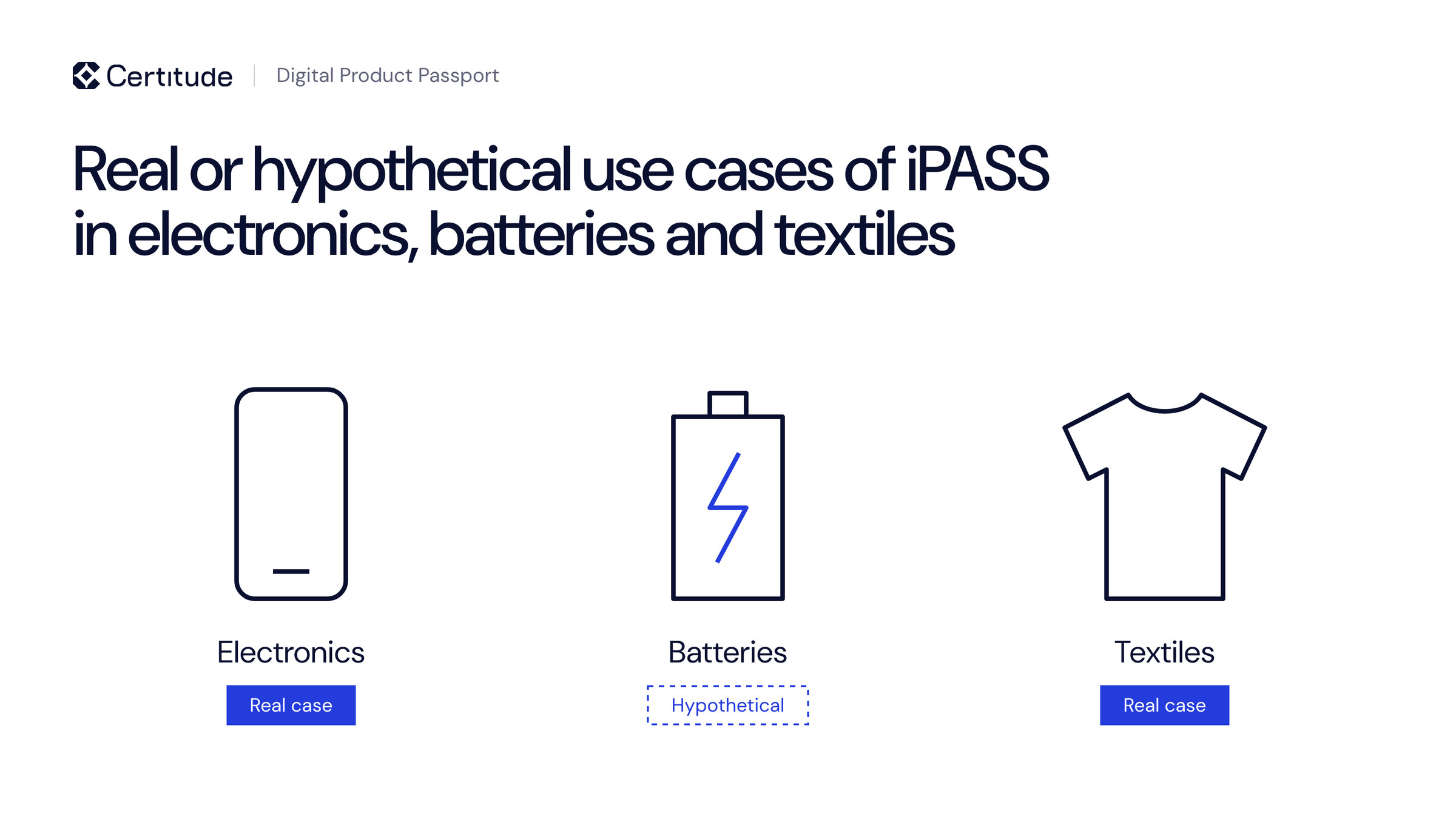
Among the first sectors that will need to adapt are three with enormous impact on the daily lives of consumers and on global sustainability: electronics, batteries, and textiles. These areas are especially critical because they generate large volumes of waste, require strategic raw materials, and have complex supply chains.
At iCommunity, with our iPASS solution, we are developing a system that allows companies to comply with regulations and, at the same time, leverage the DPP as a competitive advantage. In this article, we explore several real and hypothetical use cases in the electronics, battery, and textile sectors, showing how iPASS can transform the way we understand, produce, and consume.
Electronics: Traceability and the fight against obsolescence
Electronics is one of the most demanding sectors for the DPP, as it involves global chains, critical materials, and a high rate of innovation.
Real use case: Smartphones with a digital passport
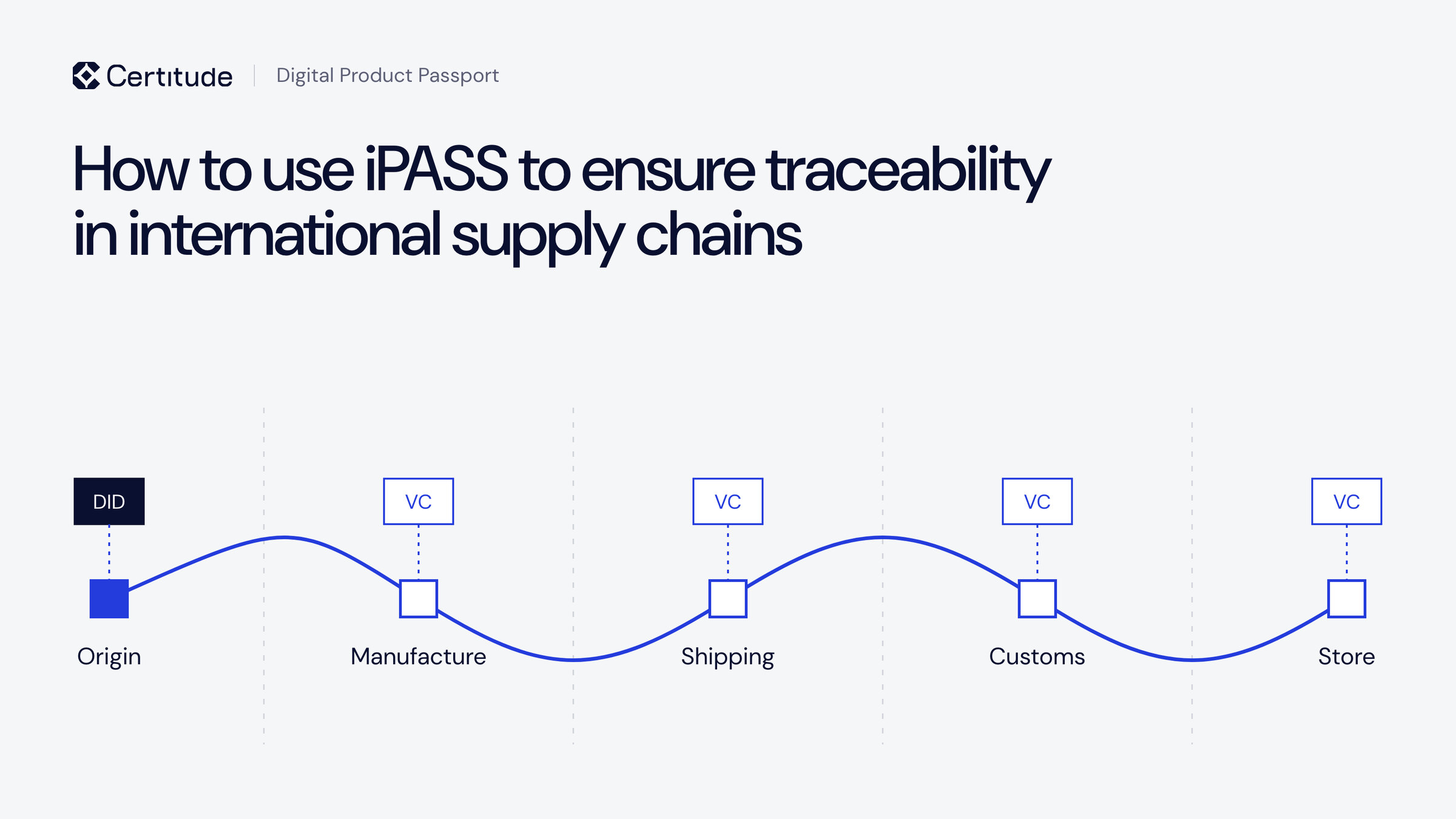
Imagine that a smartphone manufacturer integrates iPASS into its value chain. Each device has a unique Decentralized Digital Identifier (DID) and a life history accessible via QR.
Consumers can:
- Verify the origin of critical minerals such as lithium, cobalt, or coltan.
- Consult the carbon footprint generated in its production.
- Review the repair history and check if original parts have been used.
Distributors and technical services can:
- Guarantee certified repairs through Verifiable Credentials (VC).
- Extend the life of the device with a transparent history.
Regulators can:
- Audit in real time whether the company complies with European sustainability standards.
Result: planned obsolescence is combated and a more circular model is promoted.
Batteries: Transparency in the energy transition
Batteries are one of the strategic sectors in the transition to sustainable mobility. However, their production involves intensive use of critical raw materials and poses a challenge in their recycling.
Hypothetical use case: Electric vehicle batteries
An automobile manufacturer decides to use iPASS to comply with the DPP. Each battery in its electric vehicles has a unique digital passport, where all the milestones of its life cycle are recorded.
Information accessible to the consumer:
- Origin of the lithium and nickel used in the battery.
- Data on the carbon footprint associated with its manufacture.
- State of health (SoH) and number of charging cycles performed.
Benefits for operators and recyclers:
- Access to information on the reusability of each battery.
- Accurate data to decide whether the battery can have a second life (e.g., in stationary storage) or should be recycled.
Value for regulators:
- Possibility of verifying that manufacturers comply with EU recovery and recycling objectives.
Result: responsible use of raw materials is ensured and the transition to a more sustainable energy model is facilitated.
Textiles: Transparent and circular fashion
Textiles are one of the most polluting and waste-generating sectors. The DPP seeks to radically transform its operation towards a circular model.
Real use case: Garments with digital identity
A sustainable fashion brand adopts iPASS to digitize the life cycle of its products. Each garment has a QR code on the label that allows access to its history.
The consumer can check:
- Whether the cotton used is organic or recycled.
- The place of manufacture and the associated working conditions.
- Recycling or donation options at the end of its useful life.
Distributors and second-hand platforms can:
- Access the verifiable history to give confidence to the buyer.
- Certify that a reconditioned garment meets quality standards.
Recyclers can:
- Know precisely the composition of fibers (cotton, polyester, elastane) to separate materials and recycle them properly.
Result: transparency in fashion is promoted, the consumer is empowered, and the volume of textile waste that ends up in landfills is reduced.
Shared benefits in the three sectors
Although the examples vary, they all share key benefits thanks to iPASS:
- Consumer confidence: access to verifiable information in real time.
- Regulatory compliance: companies avoid sanctions and market barriers.
- Competitiveness: those who implement the DPP first will differentiate themselves in sustainability.
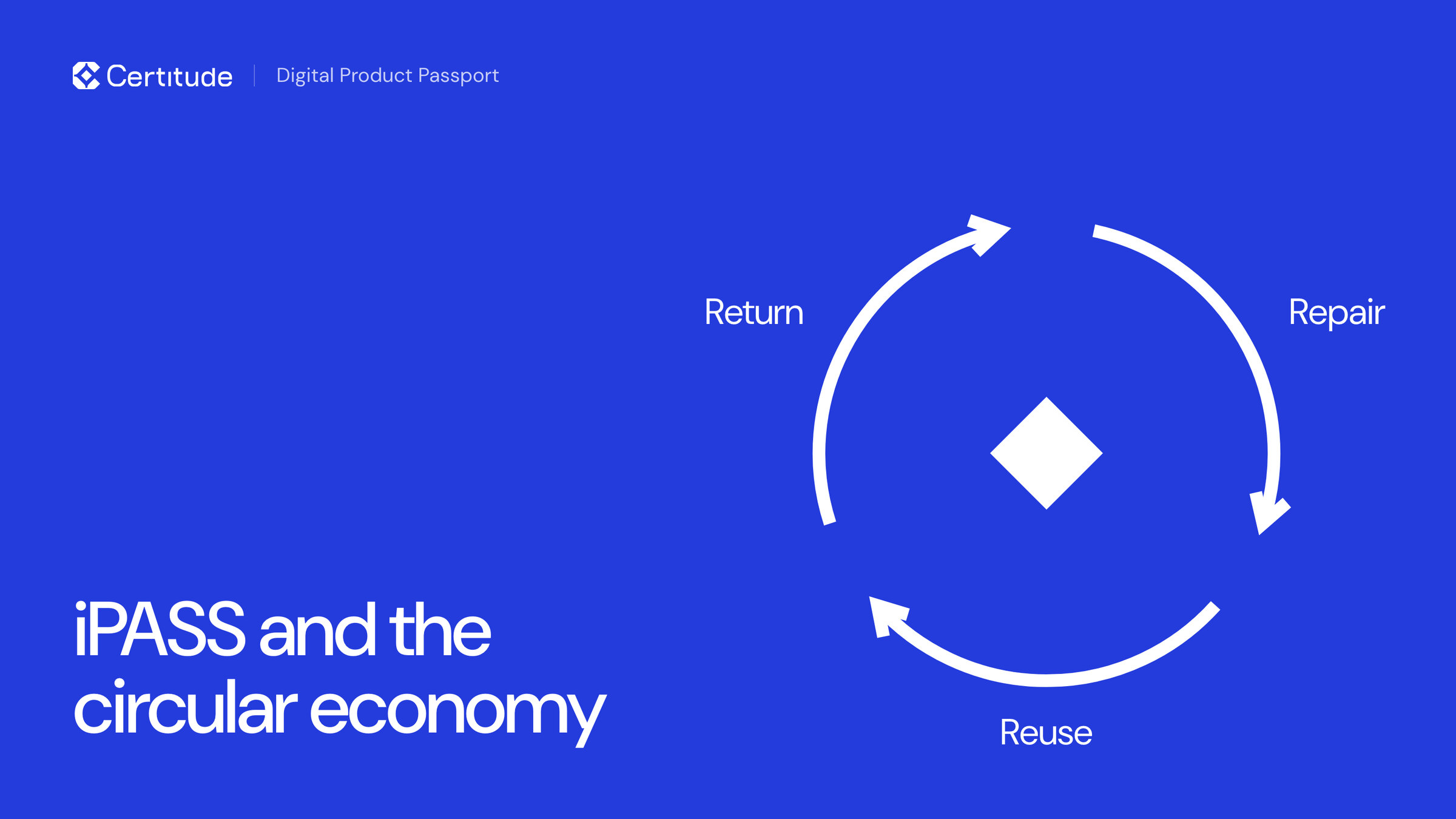
- Circularity: products extend their useful life and materials are reintegrated into the production chain.
- Efficiency in audits: regulators have digital and verifiable information.
Implementation challenges
The use cases show the potential of iPASS, but also highlight challenges that must be resolved:
- Digitization of SMEs: many lack the resources to implement digital passports.
- Data standardization: common frameworks are needed to make information interoperable.
- Consumer education: users must learn to use and value this information.
- Technical scalability: millions of products must be managed efficiently.
How iPASS responds to these challenges
At iCommunity we have designed iPASS with three fundamental pillars:
- Ease of use: intuitive panels for manufacturers and operators.
- Robust technology: based on Verifiable Credentials (VC), Digital Identifiers (DID) and the iBS blockchain platform, which guarantee immutability and public consultation.
- Sectoral approach: use cases adapted to the specific needs of each industry.
In this way, iPASS converts the DPP into a real opportunity for innovation, beyond a regulatory requirement.
The use cases in electronics, batteries, and textiles show how the Digital Product Passport will transform the relationship between manufacturers, consumers, and regulators. With iPASS, this transformation will not only be possible, but will also generate benefits in competitiveness, transparency, and sustainability.
The examples described, both real and hypothetical, make it clear that the DPP is more than a digital document: it is a trusted infrastructure that will change the way we produce and consume.
The future of the industry will be circular, digital, and transparent. And with iPASS, that future is already under construction.