
The way we consume is changing. Increasingly, buyers want to know not only what product they are purchasing, but also what story it carries behind it: where the materials come from, under what conditions it was manufactured, what its environmental footprint is, and what options they will have at the end of its useful life.
The European Union, aware of this trend and the climate urgency, has launched the Digital Product Passport (DPP), which will be mandatory from 2026 for key sectors such as textiles, electronics, batteries, and construction materials. The DPP will allow each product to have a verifiable digital history accessible to anyone interested.
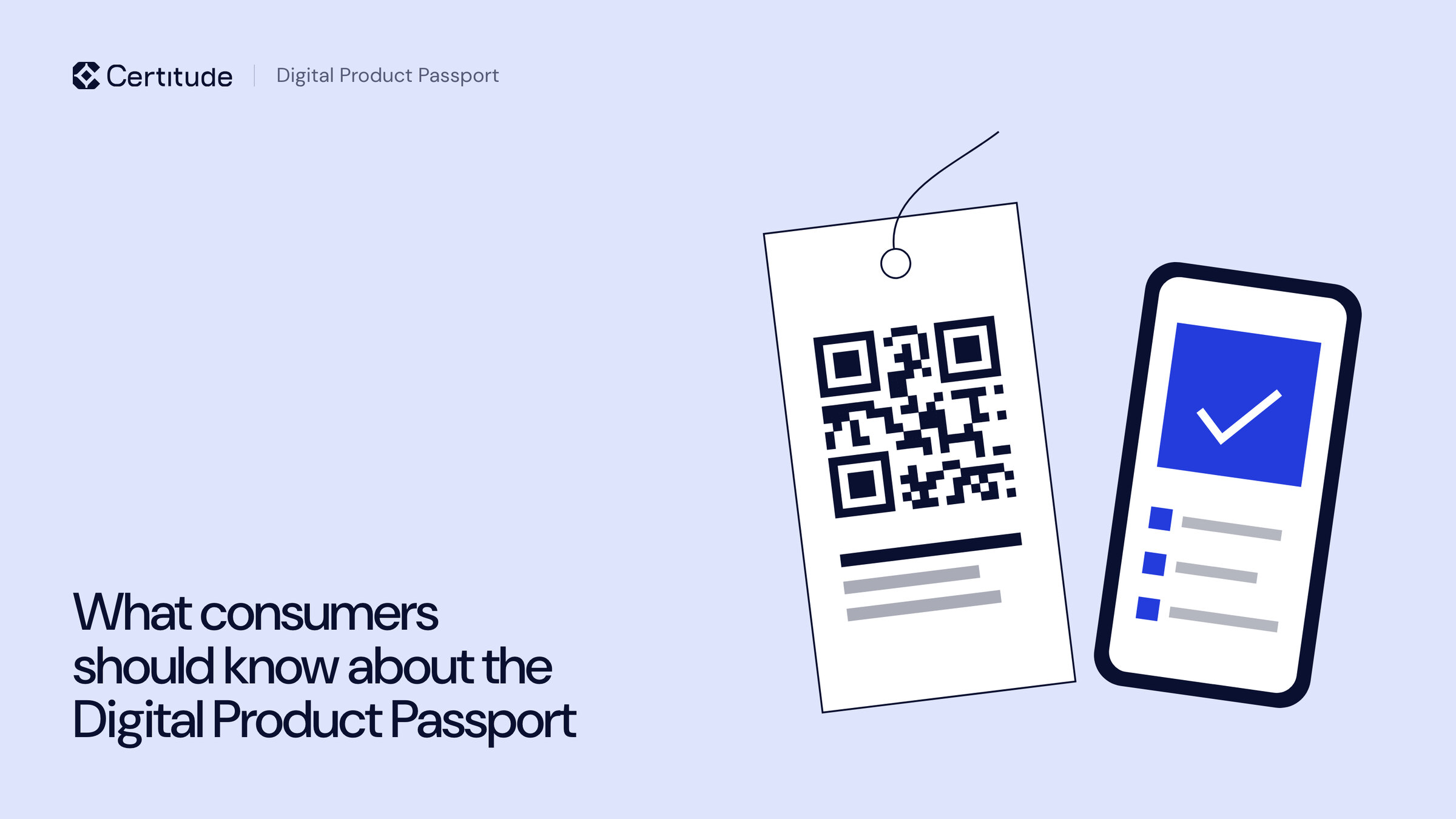
But how is that information accessed? The answer is simple and close to everyone: through a QR code or a unique link (URL) associated with the product.
In this article, we explain how consumers can use this tool, what information they will find, and how this innovation will transform the relationship between brands, users, and regulators.
Direct access to the product history
The QR code or URL of the digital passport acts as the gateway to the product’s life history. By scanning the QR code with a smartphone camera or entering the link in a browser, the consumer accesses a digital panel where all the key information is collected.
This access is:
- Immediate: it does not require specific applications, a QR reader or a browser is enough.
- Verifiable: the information is backed by digital credentials and blockchain.
- Transparent: the user receives clear data, not simple marketing statements.
- Secure: sensitive data from the supply chain is protected, showing only the necessary information.
In this way, the DPP turns each product into a connected object, with its own digital identity accessible at any time.
What information can a consumer consult?
By scanning the QR or opening the URL, the consumer can access different sections that make up the product’s life history:
- Origin of materials
- Type of fibers in a textile garment.
- Origin of minerals in an electronic device.
- Raw materials used in a battery or in the steel of a building.
- Manufacturing process
- Country and conditions of production.
- Sustainability or energy efficiency certifications.
- Environmental impact of the process.
- Use and maintenance
- Manufacturer’s warranty.
- Verified maintenance instructions.
- History of repairs or updates.
- Reuse and second life
- Reconditioning certifications.
- Product status in case of second hand.
- Recommended reuse options.
- End of life and recycling
- Authorized collection or recycling centers.
- Recoverable materials and percentage of recyclability.
- Energy value of non-recyclable waste.
This level of detail makes the DPP an instrument of empowerment for the consumer, who can make more informed and responsible purchasing decisions.
Sectoral examples
Textiles and footwear
A consumer buys a jacket and scans the QR on the label. They discover that it is made with recycled fibers, produced in a factory with renewable energy and that, at the end of its life, it can be deposited in specific collection points to recycle the polyester.
Electronics
When purchasing a smartphone, the buyer accesses information about the origin of the lithium and cobalt in its battery, the energy impact of the device, and the official repairs carried out. They also find options to extend its useful life.
Batteries
An electric vehicle owner can scan the QR of the battery and verify its recycling capacity, the emissions associated with its production, and the actual state after several charging cycles.
Construction materials
An architect consults the QR of a batch of steel and confirms that it comes from recycled materials, with low emissions during production, which adds value to the sustainable building project.
Benefits for consumers
The use of the QR/URL brings direct advantages to users:
- Confidence in the purchase: clear and verified information on sustainability and quality.
- Greater control: knowing how to care for the product, prolong its useful life and where to recycle it.
- Responsible consumption: choosing brands aligned with their environmental and social values.
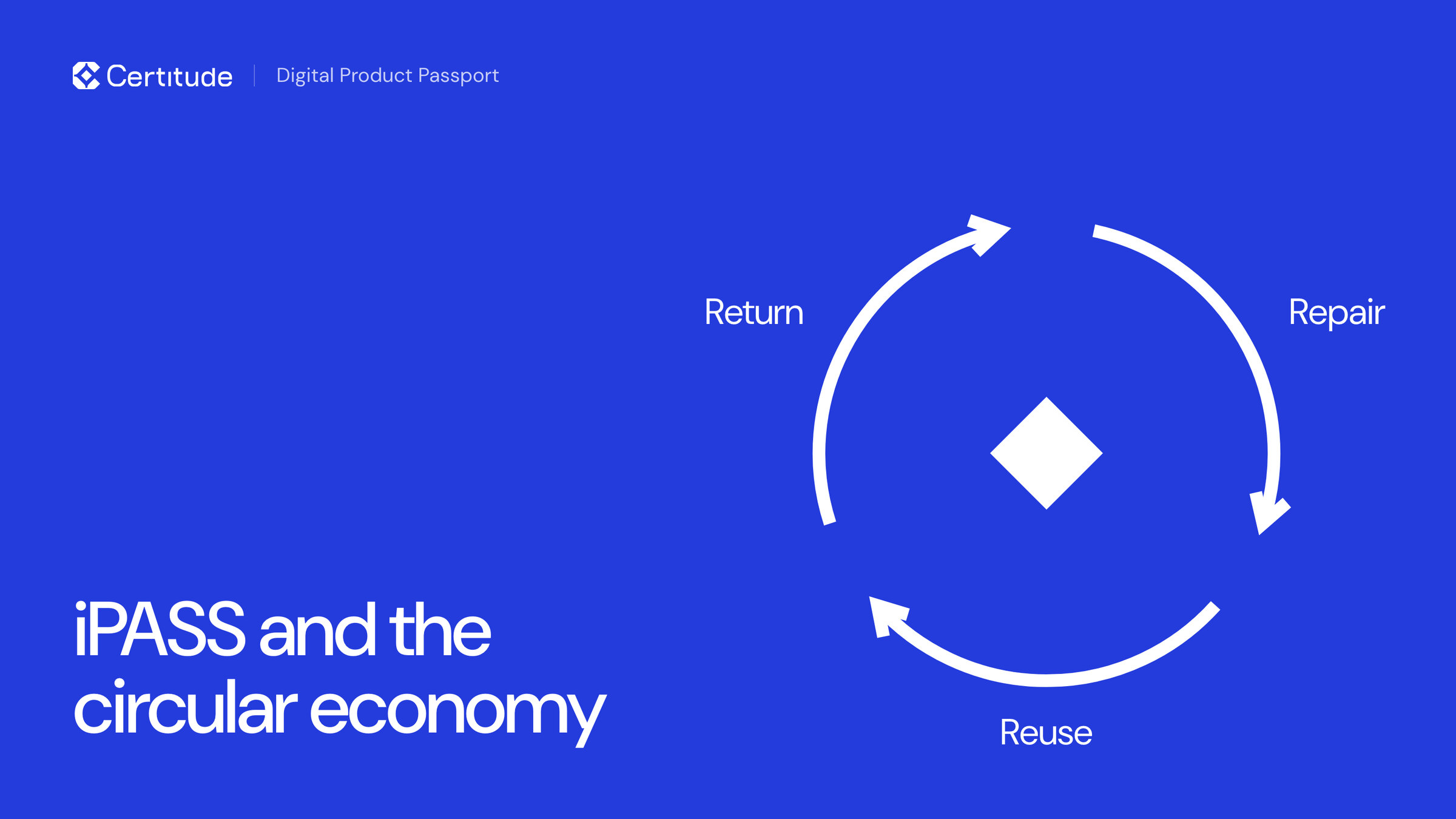
- Access to additional services: such as digital guarantees, authorized repairs or rewards for returning products at the end of their life cycle.
In short, the consumer ceases to be a passive receiver and becomes an active actor in the circular economy.
Benefits for companies
Although the main focus is on empowering the consumer, brands also benefit from this new dynamic:
- Reputation and differentiation: companies that offer transparency will gain a competitive advantage.
- Loyalty: customers will trust more in brands that show verifiable data.
- New business models: repair services, recycling programs or return incentives.
- Regulatory compliance: the DPP turns the legal obligation into a marketing and trust tool.
The technology behind the QR/URL
The key for this system to work is in the digital infrastructure that supports it:
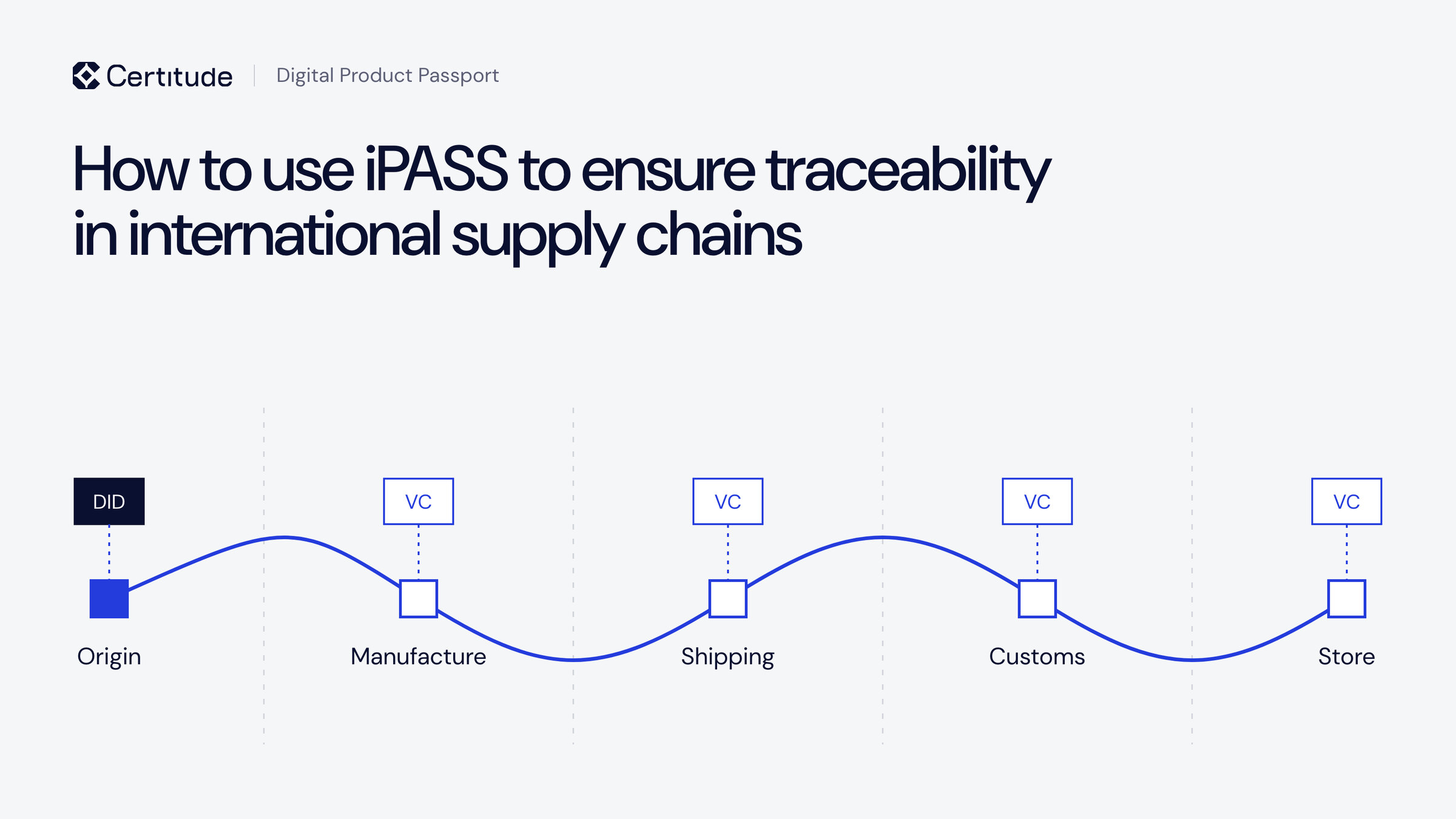
- Decentralized Digital Identifiers (DID): each product has a unique and unrepeatable identifier.
- Verifiable Credentials (VC): each milestone of the product becomes a digital credential issued by a responsible actor.
- Blockchain (iBS and iPASS): the data is recorded in an immutable way, ensuring that it is not manipulated.
The QR or the URL are simply the friendly gateway to a complex and robust system, designed to guarantee digital trust.
Implementation challenges
Like any innovation, this model faces some challenges:
- Consumer education: teaching users to take advantage of this information.
- Standardization: ensuring that QRs and URLs work the same in different sectors and countries.
- Data protection: showing only information relevant to the consumer, protecting sensitive company data.
- Mass adoption: ensuring that all companies, including SMEs, can implement the system.
The future of connected consumption
Access to the life history of a product through QR or URL is only the beginning. In the future we will see:
- Digital consumption wallets, where users store digital passports of the products they buy.
- Integration with loyalty programs, rewarding those who recycle or return products.
- Greater international interoperability, where the same QR can be used in different markets and continents.
- New consumption habits, based on transparency and responsibility.
The Digital Product Passport (DPP) will mark a before and after in the way we relate to what we buy. Thanks to simple tools such as a QR code or a unique URL, consumers will have direct access to a verifiable digital history that will allow them to make more informed decisions, prolong the useful life of their products and actively participate in the circular economy.
With iPASS, from iCommunity we are building the infrastructure that makes this vision possible: products with digital identity, immutable information and shared trust.
The future of consumption will be transparent, connected and circular, and it will all start with a simple gesture: scanning a code.