Environmental impact of the DPP: Waste reduction and improved recycling practices
By Marta Escabias
The world is going through an unprecedented environmental crisis: excessive waste, the overexploitation of resources, and a lack of transparency in supply chains are jeopardizing the planet’s sustainability. In this scenario, the European Union has launched one of its most ambitious initiatives: the Digital Product Passport (DPP).
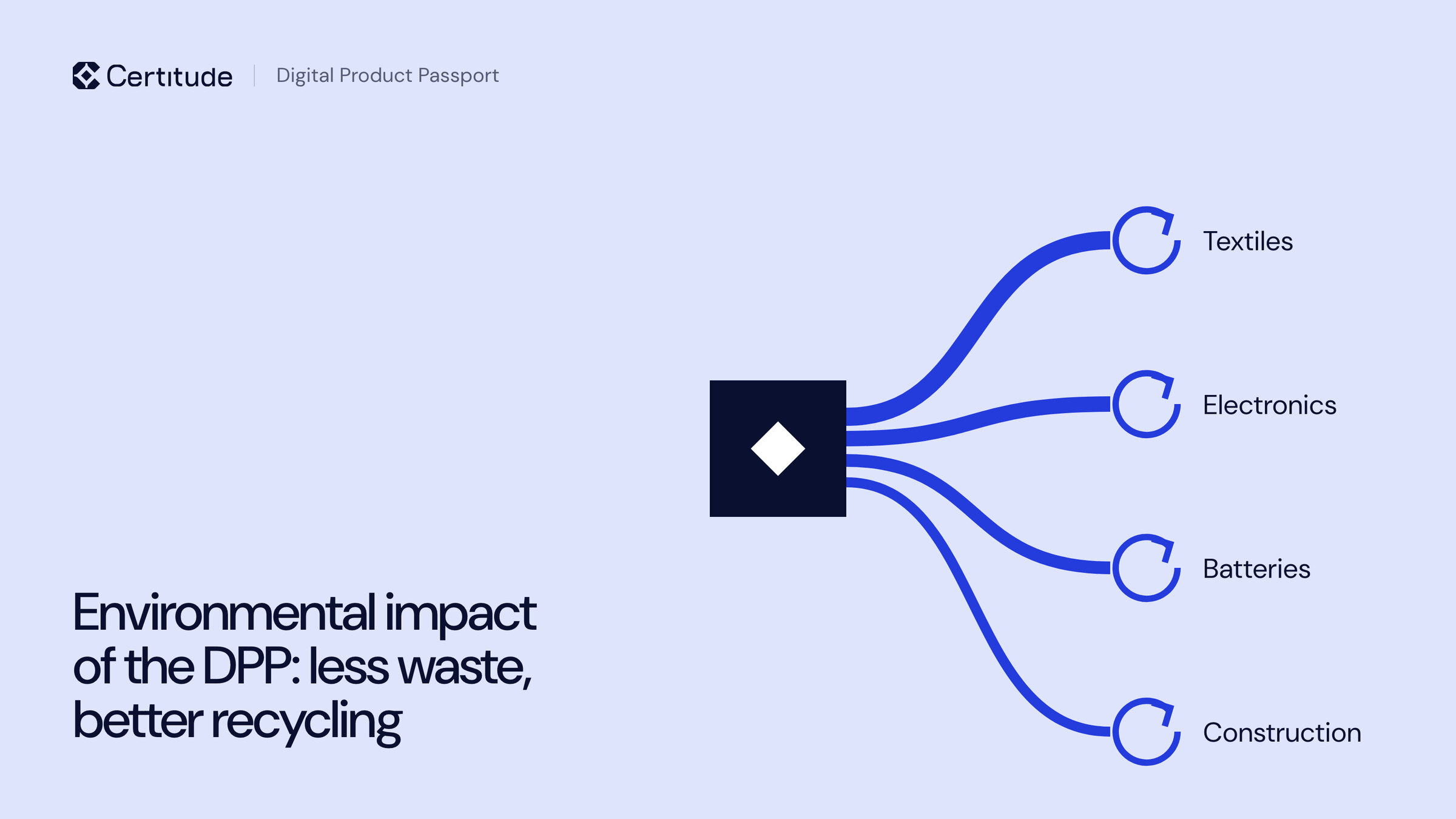
As of 2026, key sectors such as textiles, electronics, batteries, and construction materials will be required to incorporate a verifiable digital record that documents the entire life cycle of their products. The objective is not only to improve traceability but also to generate a positive environmental impact: reduce waste, promote reuse, and establish better recycling practices.
In this article, we analyze how the DPP will contribute to transforming the environmental management of products, what benefits it will bring, and how solutions such as iPASS, developed by iCommunity, can be key in this process.
The current waste problem
The figures speak for themselves:
- In Europe, more than 12 million tons of textile waste are generated each year, most of which is not recycled.
- Electronic devices are the fastest-growing waste stream in the world, with 53 million tons annually worldwide.
- Electric vehicle batteries pose a growing challenge due to the impact of their production and the management of their waste.
- Construction and demolition generate around 35% of total solid waste in the EU.
The linear model of “produce–use–dispose” has reached an unsustainable limit. The DPP seeks to radically change it towards a circular model, where each product has a second, third, or even fourth life.
How the DPP contributes to reducing waste
The Digital Product Passport will help reduce waste generation in several ways:
- Greater traceability: by registering the origin and composition of the materials, proper separation and recycling are facilitated.
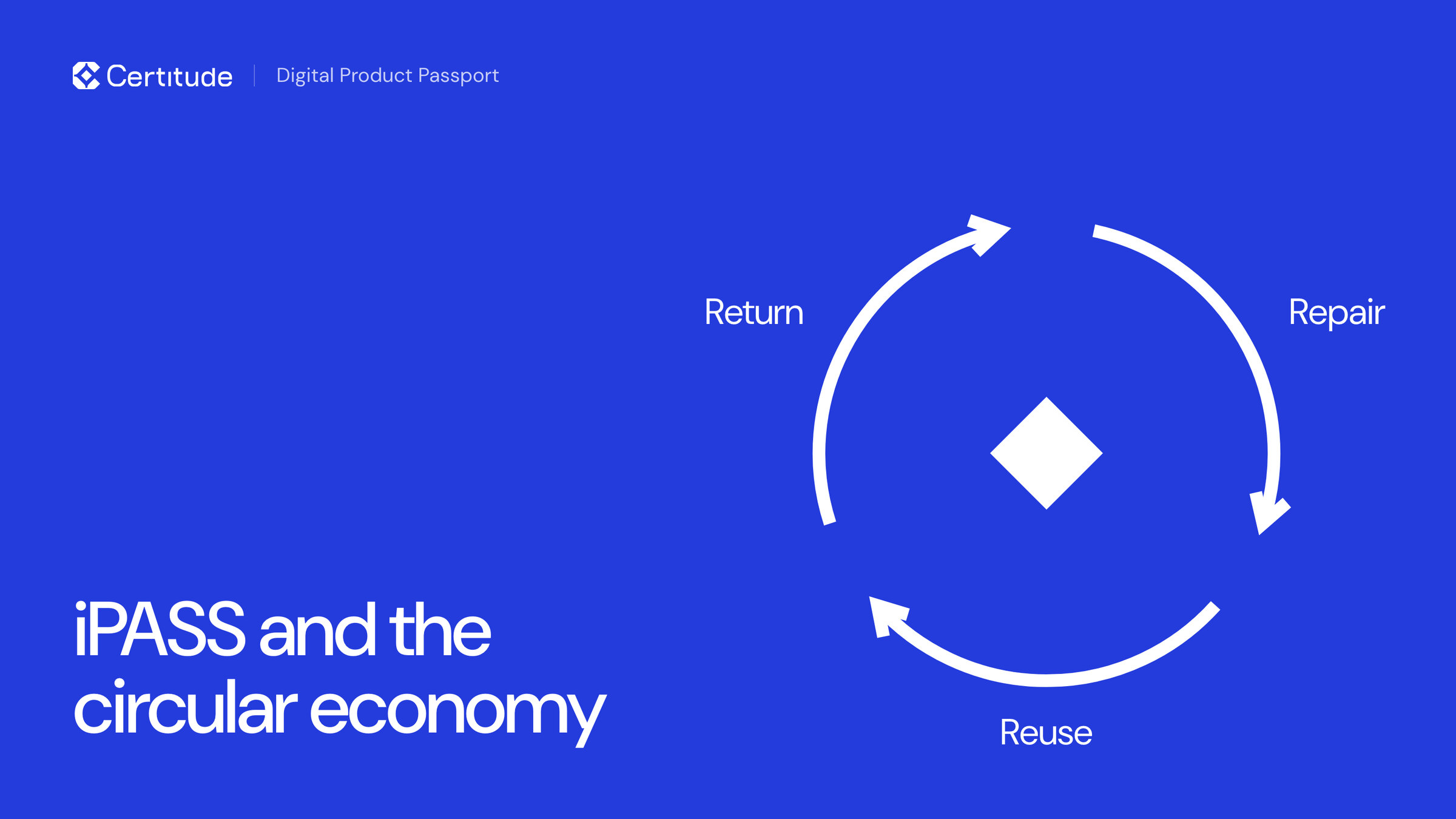
- Reuse and repair: the DPP will include information on maintenance, previous repairs, and second-life options.
- Circular economy: converts waste into resources, facilitating the recovery of valuable materials.
- Waste prevention: by obliging companies to be transparent, a more sustainable and durable design is encouraged.
The result will be a progressive reduction of waste sent to landfills or incinerators, with both environmental and economic benefits.
Improved recycling practices driven by the DPP
Recycling is one of the main pillars of the DPP, as it requires each product to carry the information necessary to be managed correctly at the end of its useful life.
In Textiles and footwear
The DPP will allow the exact composition of the fibers to be identified, which is key in garments with mixtures of cotton, polyester, or elastane. This will facilitate the separation of materials and the creation of new, higher-quality recycled fibers.
In electronics
Electronic devices contain critical materials such as lithium, cobalt, or rare earths. With the DPP, the origin can be documented, and the recovery of valuable components can be facilitated, reducing dependence on mining.
In batteries
Battery recycling is a strategic challenge. The DPP will include data on its recyclability, carbon footprint, and raw materials, making more efficient management and the development of new advanced recycling techniques possible.
In construction materials
With the DPP, cement, steel, and other construction materials will be able to document emissions, energy use, and reuse options. This will allow them to be reintegrated into new construction projects instead of ending up as rubble.
The role of manufacturers in environmental management
For the DPP to have a real impact on waste reduction, manufacturers must assume an active role:
- Design for circularity: create products with reuse and recycling in mind from the start.
- Total transparency: share verifiable information on materials and processes.
- Collaboration in the value chain: work with distributors, repairers, and recyclers to close the loop.
Tools like iPASS allow manufacturers to digitize and manage all this information in a simple and standardized way.
Environmental benefits of the DPP
The positive impact of the DPP is not limited to waste reduction. Among the main benefits, we find:
- Reduction of CO₂ emissions, by making better use of resources and avoiding the extraction of new raw materials.
- Reduced pressure on landfills, by increasing the rate of recycling and reuse.
- Promotion of sustainable materials, thanks to regulatory pressure and consumer scrutiny.
- Boost to innovation in recycling, by generating demand for more efficient and higher-quality processes.
The DPP is, in essence, a tool to align the economy with global environmental objectives.
The role of consumers
Consumers also play an essential role in this change. Thanks to the DPP, they will be able to:
- Scan a QR/URL on the product and learn about its materials and recycling options.
- Participate in return or recycling programs incentivized by brands.
- Make more responsible purchasing decisions, choosing products with greater circularity.
The consumer ceases to be a simple user and becomes an active agent of the circular economy.
How iPASS enhances the environmental impact of the DPP
At iCommunity, we developed iPASS as the infrastructure that makes it possible to turn the theory of the DPP into practice. With the use of:
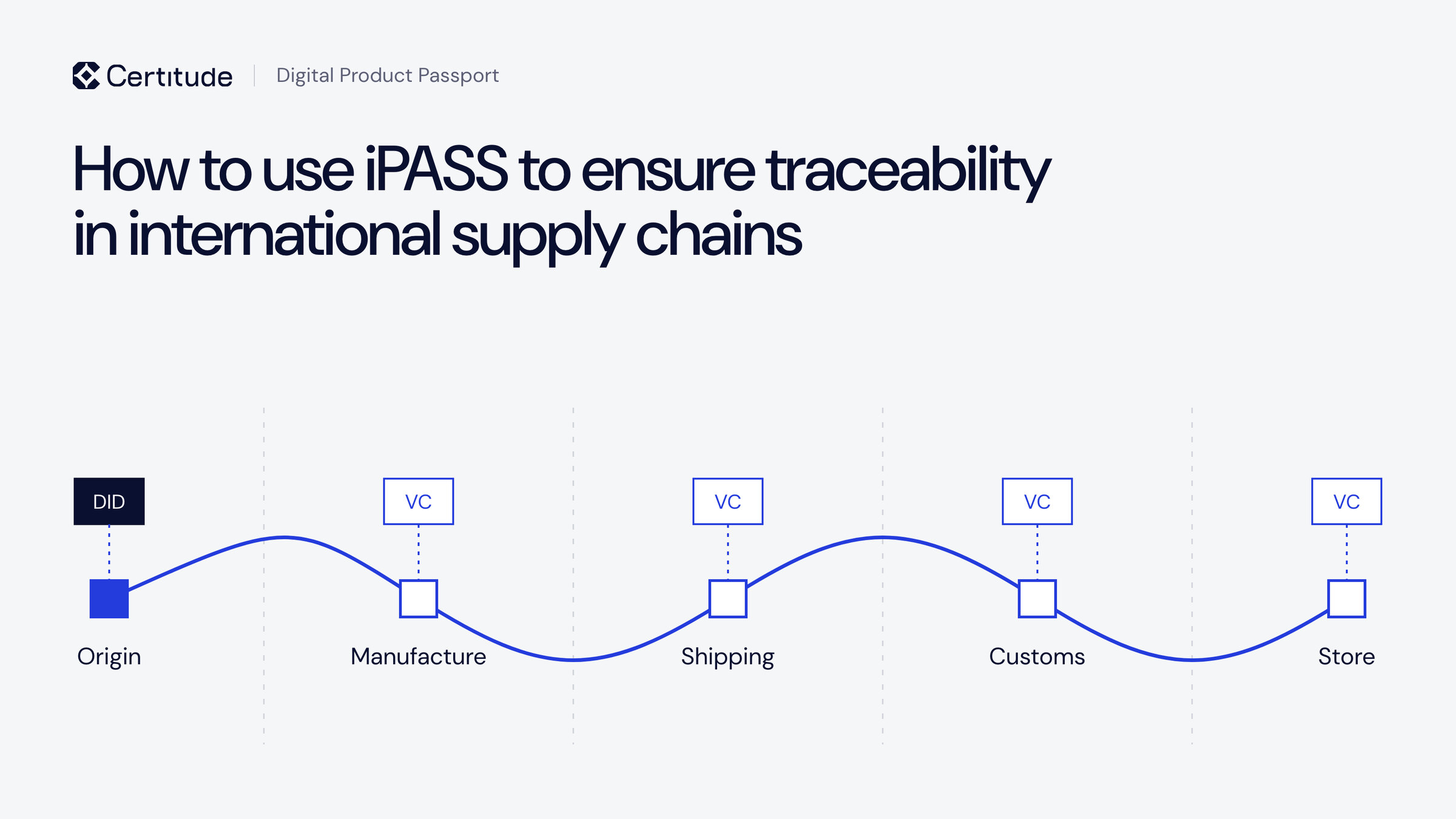
- Verifiable Credentials (VC): each milestone of the product is recorded and validated.
- Digital Identifiers (DID): each product has its unique and traceable identity.
- iBS Blockchain: the data remains immutable and publicly accessible.
With this technology, iPASS ensures that data on reuse, recycling, and environmental footprint not only exists but is reliable, verifiable, and accessible to all.
Challenges to achieving the environmental impact of the DPP
However, achieving these objectives requires overcoming several challenges:
- Digitization of SMEs, which may lack the resources to implement the DPP.
- International standardization, so that products circulate with passports recognized in different markets.
- Education of consumers and companies, to understand how to use the information in the DPP.
- Technological scalability, to efficiently manage millions of digital passports.
Overcoming these challenges will be key for the DPP not to remain just another standard but to become a real sustainability tool.
The Digital Product Passport is not just a regulatory obligation; it is a unique opportunity to reduce waste, improve recycling practices, and move towards a truly circular economy.
With sectors such as textiles, electronics, batteries, and construction at the forefront of implementation, the environmental impact of the DPP will be immediate and profound.
From iCommunity, with iPASS, we work to make this change possible, offering a technological solution that guarantees traceability, transparency, and immutability of data.
The future will be circular, and the DPP will be the key for each product to tell its story and contribute to a more sustainable planet.