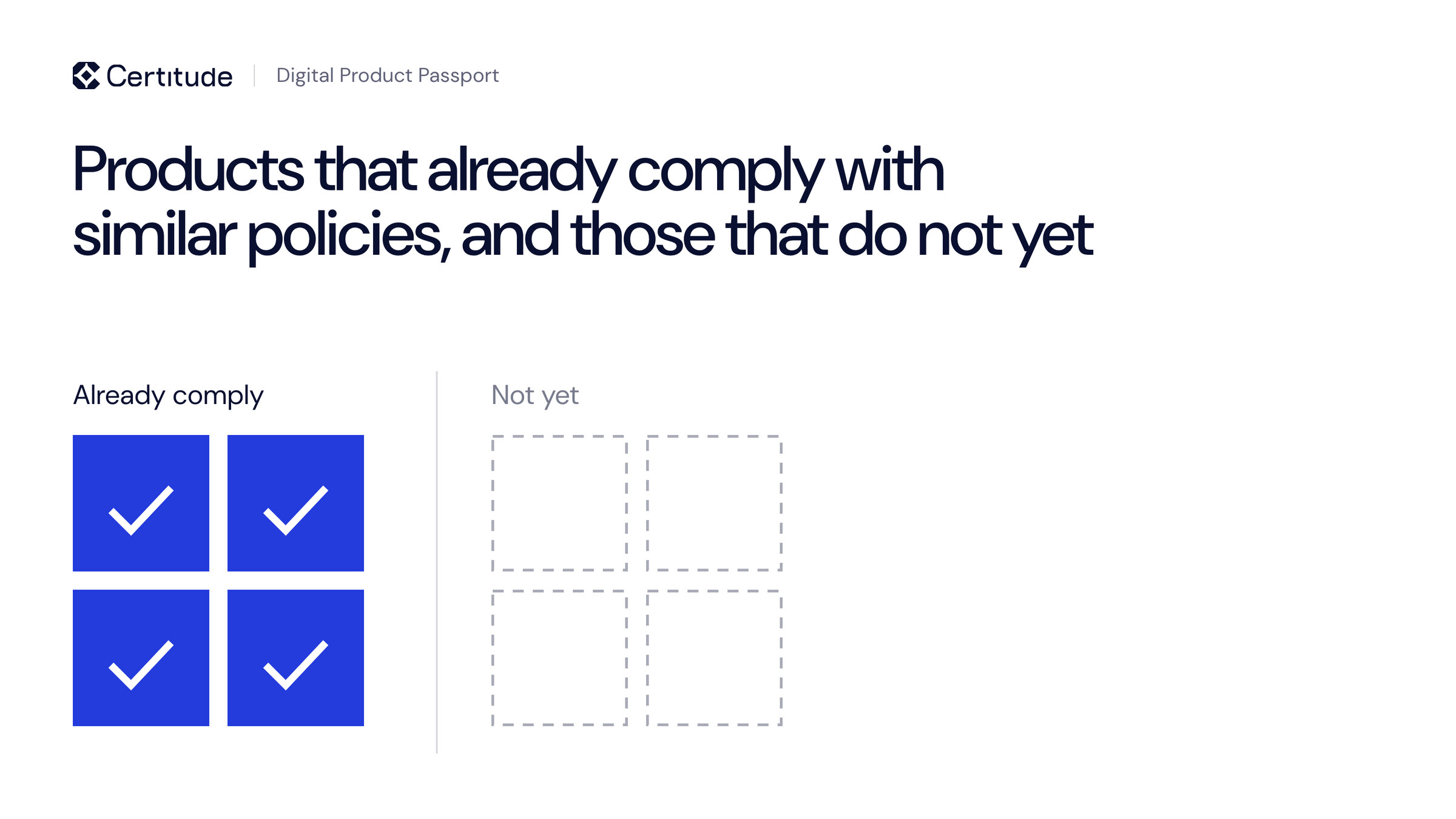
Comparison: Products that already comply with similar policies vs. products that do not yet
By Marta Escabias
The Digital Product Passport (DPP) represents one of the most transformative measures of the European Union in terms of sustainability and circular economy. Its application will begin in 2026 in sectors such as textiles, electronics, batteries, and construction materials, and will progressively extend to more industries.
Although the DPP is not yet mandatory, there are products and sectors that already comply with similar traceability and transparency policies, while others are just beginning to prepare. This difference marks an important contrast: some are already aligned with the vision of circularity and trust proposed by the DPP, while others will have to make profound changes in their processes.
In this article, we analyze this comparison, with concrete examples, benefits for the pioneers, and risks for those who lag behind.
Products that already comply with similar policies
Some sectors have been applying traceability, certification, and transparency measures for years that anticipate the arrival of the DPP. These products already have verifiable mechanisms that allow knowing part of their history and their environmental impact.
Sustainable textiles
- Many fashion brands have implemented certificates such as GOTS (Global Organic Textile Standard) or OEKO-TEX, which guarantee the use of sustainable fibers or processes without harmful chemicals.
- Some garments include QR codes on the label that provide information on the origin of the fibers or the manufacturing factory.
- Innovative startups offer blockchain traceability services to show consumers the entire journey of a garment.
Responsible electronics
- Leading companies already apply recycling and reconditioning programs for electronic devices.
- Some manufacturers certify the responsible sourcing of critical minerals (lithium, cobalt, coltan), aligning with international regulations such as the Conflict Minerals Act.
- Smartphone and laptop brands have begun to offer carbon footprint reports per device.
Batteries
- In Europe, the new battery regulations already require information on composition, recyclability, and environmental footprint.
- Some electric vehicle manufacturers offer mobile applications that show the health status of the battery and its charging history.
Construction materials
- Certifications such as LEED or BREEAM already include traceability requirements on emissions and energy efficiency in construction materials.
- Some steel and cement suppliers offer digital documentation on CO₂ emissions and the use of recycled resources.
These examples show that the path towards the DPP is already underway in many products, although in a fragmented manner and not always with a unified standard.
Products that do not yet comply
On the other hand, there are still sectors and products that lack robust traceability mechanisms. In these cases, the arrival of the DPP will represent a disruptive change.
Conventional textiles
- Most low-cost garments do not offer information beyond a generic composition label.
- Traceability on fibers, dyes, or working conditions is almost non-existent.
- There is no clear data on recyclability, which limits their recovery at the end of their useful life.
Mass consumer electronics
- Many low-end or mid-range electronic devices lack information on the origin of materials.
- There is no repair history accessible to the consumer, which encourages planned obsolescence.
- Collection and recycling programs are still limited and not very transparent.
Second-generation batteries
- A large part of the batteries used in small electronic products (mobiles, laptops, power tools) do not have digital traceability.
- Recycling remains low, and there is no accessible information on reuse capacity.
Traditional construction materials
- In the conventional construction sector, many companies still do not offer detailed environmental information on their materials.
- Most rubble and waste end up in landfills without standardized reuse processes.
In these cases, the gap with the pioneers is evident, and adaptation to the DPP will imply significant changes in processes, digitization, and corporate culture.
Benefits of the pioneers
Products that already comply with policies similar to the DPP enjoy clear competitive advantages:
- Consumer trust: transparency generates reputation and loyalty.
- Access to demanding markets: many countries and international clients prioritize suppliers with certifications.
- Preparation for the DPP: they will have an easier transition when the regulations come into force.
- Innovation and differentiation: positioning themselves as leaders in sustainability reinforces the brand.
- Access to green financing: products with sustainable traceability can access funds and incentives more easily.
Risks of the laggards
On the contrary, products that do not yet comply face significant risks:
- Sanctions and market barriers: non-compliance with the DPP will prevent selling in the EU.
- Loss of competitiveness: consumers will prioritize transparent and sustainable brands.
- Late adaptation costs: implementing changes hastily will be more expensive and less efficient.
- Distrust: the lack of information will fuel the perception of opacity or greenwashing.
The role of iPASS in closing the gap
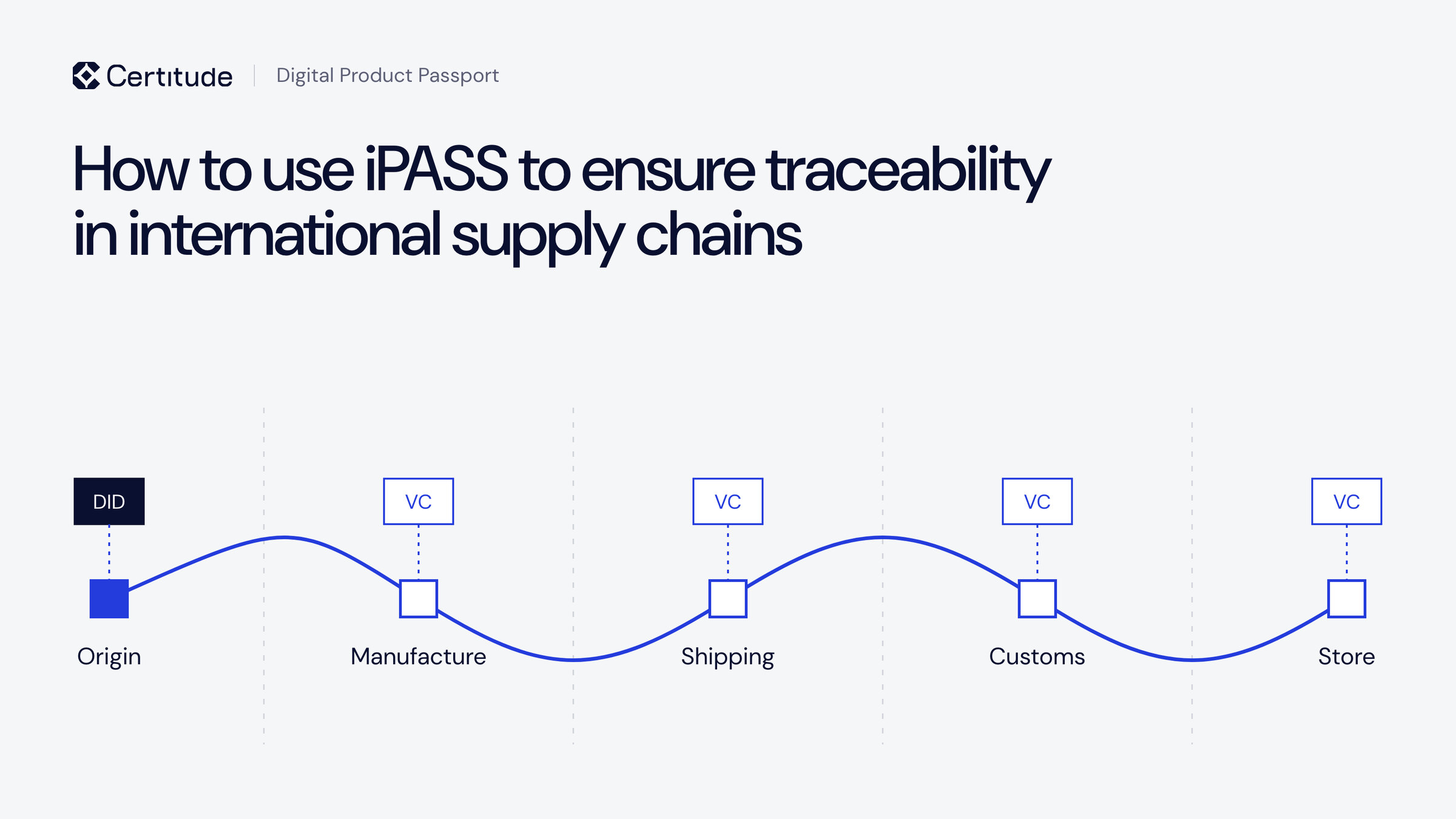
At iCommunity we have designed iPASS to help both pioneers and laggards comply with the DPP in an agile and standardized manner. Thanks to technologies such as Verifiable Credentials (VC), Digital Identifiers (DID), and the blockchain platform iBS, iPASS ensures that the data of each product is immutable, verifiable, and publicly accessible.
The arrival of the Digital Product Passport in 2026 will mark a dividing line between those who have already adopted transparency and sustainability practices, and those who have not yet begun that path.
Products that already comply with similar policies are better positioned to benefit from the change, while those that do not comply must adapt quickly to avoid being left out of the European market.
With iPASS, from iCommunity we help close this gap, offering a solution that turns the regulatory obligation into an opportunity to innovate, gain trust, and lead the transition towards a circular economy.
The future will be transparent and circular. The question is: which products will be ready to take advantage of it from day one?